
ELANA SWARTZ
FILM
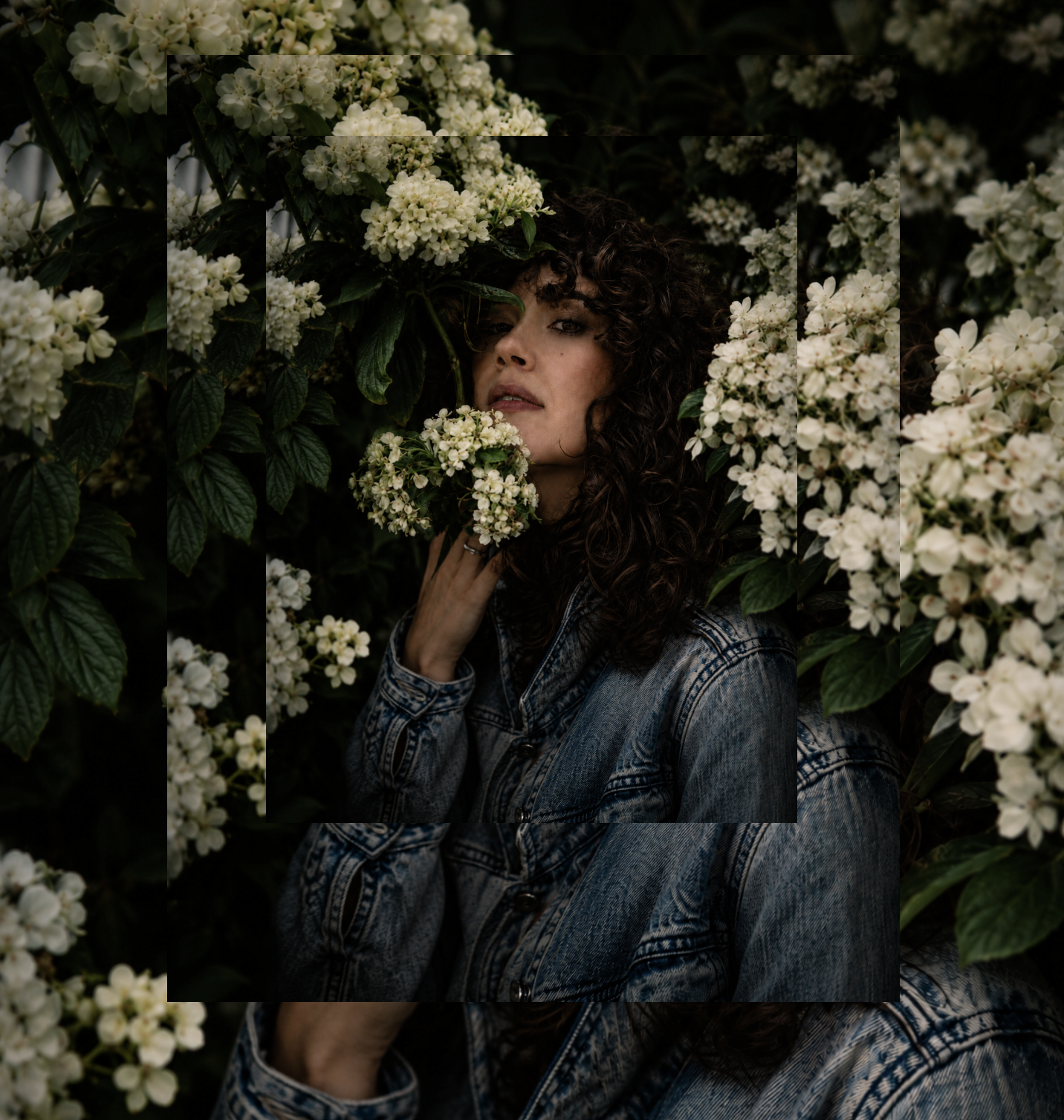
Photography by @classyjorge
ELANA IS REWRITING THE SCRIPT
FILM / INTERVIEWED BY LAUX | AUGUST 2026
IMAGERY VIA
@elanajswartz
Before we get started, I pulled a tarot card while thinking about you.
I pulled the Eight of Wands.
The Eight of Wands represents momentum, movement, and those moments when life suddenly begins unfolding faster than expected. Traditionally, it is a card of breakthroughs and forward motion. It reminds us that sometimes, after a long period of waiting or uncertainty, everything begins to move at once.
At its highest expression, it represents momentum, freedom, confidence, communication, and trusting the direction life is taking you. Its shadow side can be feeling overwhelmed, moving too quickly, acting impulsively, or struggling to slow down and remain present.
With that in mind, the turning-point question I came up with is:
Can you tell me about a time when your life suddenly started moving in a completely different direction?
I think that moment was when I moved to San Francisco. My husband and I moved here during the summer of 2021, in the middle of the pandemic. Originally, we thought we would move to Washington, D.C. I had a lot of theater connections there through my college program, so it seemed like the natural choice. But my husband is a product designer, and he couldn’t find the kind of job he wanted there. So D.C. was taken off the table.
We had visited San Francisco in 2016 when he came here for work and I tagged along. We explored the city and different parts of the Bay Area, and we completely fell in love with it. I looked at him and said, “What about San Francisco? What about California?” We both laughed. Then we looked at each other and realized it might actually be a good fit. There was something exciting about going somewhere new, trying something completely different, and getting away from all the things that had always felt normal.
I had traveled before, but I had never lived anywhere other than where I grew up. Moving gave us the opportunity to start over. We finally said, “What’s the worst that could happen? If we hate it, we can move again.” So we did.
You mentioned that moving to San Francisco felt like a leap into the unknown. Looking back now, what do you think that leap taught you?
It taught me that I was far more adaptable than I’d ever given myself credit for. Before moving here, I liked knowing exactly what was coming next. I liked having a plan. Leaving everything behind meant giving up that certainty.
When we arrived, we didn’t know many people. We had to build an entirely new life from scratch. There were moments when it felt overwhelming. But there was also something incredibly freeing about realizing we could reinvent ourselves. Nobody here knew who I’d been before. I wasn’t carrying expectations from childhood or college. I could simply become whoever I wanted to become. That was both exciting and terrifying.
Over time, San Francisco started feeling less like the place I’d moved to and more like home. The city challenged me in ways I didn’t expect. It pushed me creatively. It introduced me to people I never would have met otherwise. Most importantly, it reminded me that growth usually begins the moment you stop waiting to feel completely ready. Sometimes changing your environment changes you.
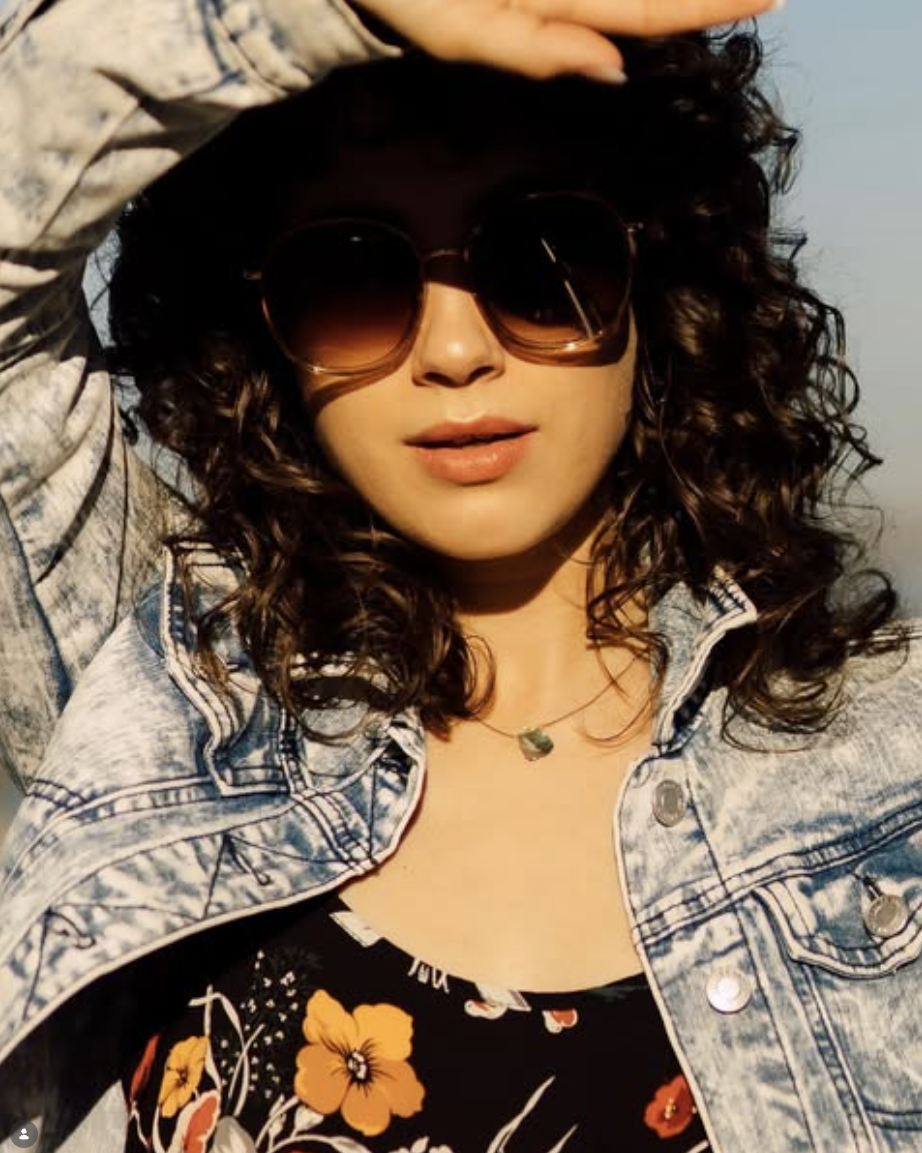
Photography by @alexndr_sala
What did creativity look like when you were growing up?
I don’t really remember a time when creativity wasn’t part of my life. My dad taught theater, so rehearsals, costumes, performances, and productions were completely normal to me. I grew up backstage. It was just part of our family. Because of that, storytelling always felt natural.
I wasn’t thinking about becoming an actor. I was simply surrounded by people making things together, creating worlds together. As I got older, I started exploring different creative outlets. Theater was always home, but I became fascinated by everything that existed around it too. Costuming. Makeup. Directing. Playwriting. I loved seeing how every person contributed something different to create a single experience.
That’s probably what drew me in the most. Not just performing. Creating something larger than yourself.
When did acting become more than something you enjoyed? When did it become something you knew you needed?
I don’t know that there was one lightning-bolt moment where I thought, “This is it.” But going to school for theater made it real. For the first time, I was investing real money, real time, and asking my husband to sacrifice alongside me. I remember thinking, “I’m not going to screw this up.” It wasn’t just a hobby anymore. It was a commitment.
Then, just before we moved to San Francisco, my brother-in-law passed away. Our move was delayed about a month while I stayed with my sister and helped however I could. By the time we finally arrived in California, I was carrying a tremendous amount of grief.
One day an audition came across my email. It was for Much Ado About Nothing, one of my favorite Shakespeare plays. I almost didn’t go. Everything still felt so heavy. But something in me knew I needed theater more than ever. Looking back, that audition wasn’t just about acting. It was my way back to myself with the help of a theater community.
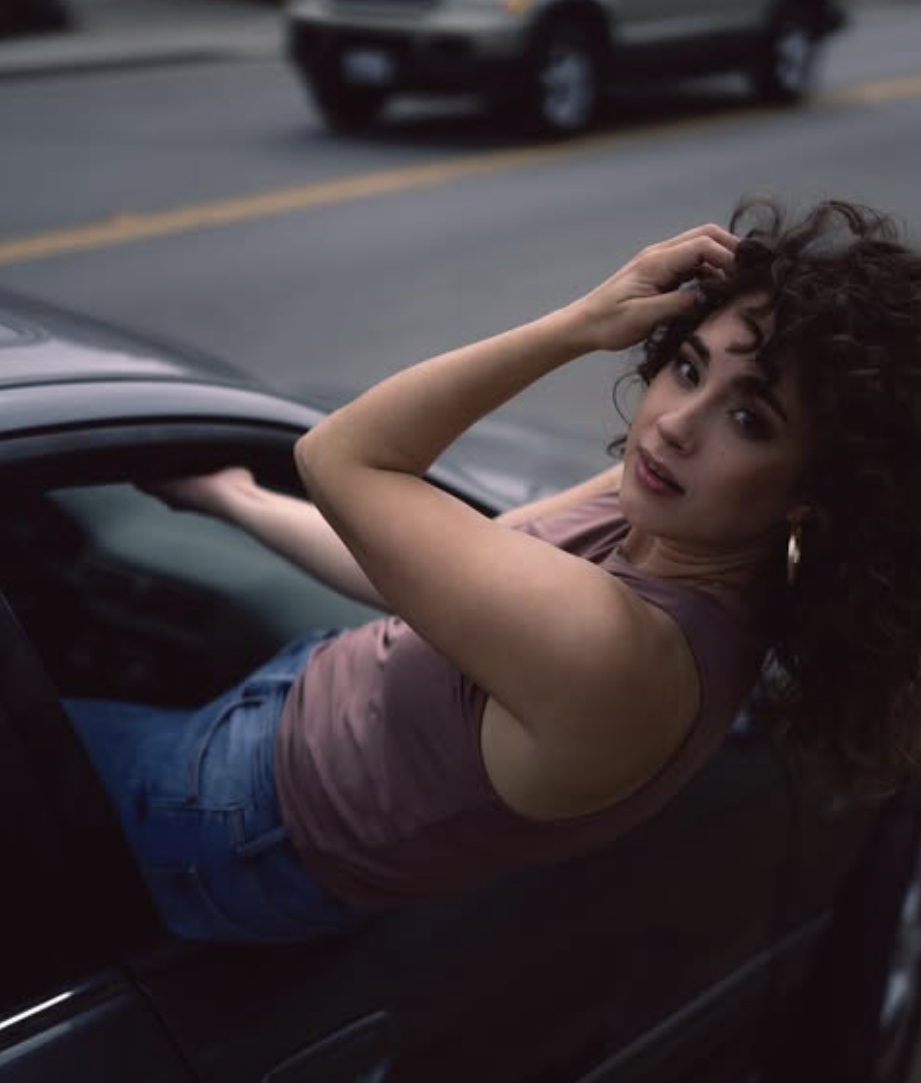
Photography by @morgan_flanagan2
Can you remember a place from your childhood that still feels alive in your memory?
The first place that comes to mind is the auditorium at my dad’s high school. Theaters have always felt alive to me. They’re almost like churches. They’ve witnessed so much humanity. Joy. Grief. Fear. Laughter. Hope. It’s all held within those walls.
People come into a theater willing to be vulnerable. Actors step onstage and offer pieces of themselves, while audiences quietly lower their defenses and allow themselves to feel something they might otherwise avoid.
Every audience is different. Every performance changes because the people in the room change. That’s what makes theater feel alive. It’s never exactly the same twice.
To me, it’s a sacred space. Not because of the building itself, but because of what happens inside it. When people gather together to tell stories, something bigger than all of us begins to emerge. That’s what keeps pulling me back.
What’s something you’ve had to let go of in order to become who you are?
Perfectionism. Or maybe more accurately, the idea that there’s a “right” way to live.
Growing up in a deeply religious household, there was always this sense that life followed a particular path. There was a right decision, a right timeline, a right way to behave. As a woman, I felt that pressure even more. If I didn’t look a certain way, if I didn’t sound a certain way, if I didn’t meet every expectation, then somehow I was falling short.
That mindset followed me into acting. Because my body, my voice, and my emotions are the instruments I use to do my work, it’s incredibly easy to confuse criticism of a performance with criticism of myself. I’ve had to learn that those are two very different things. Someone can dislike my performance without rejecting me as a person.
I think women do this all the time. We cast ourselves into roles long before anyone else does. We decide who we’re allowed to be, what we’re good at, what’s “in character” for us, and what isn’t. Then we stop ourselves from trying new things because they don’t fit the version of ourselves we’ve already written.
But we’re allowed to rewrite the script. We’re allowed to surprise ourselves. We’re allowed to become someone we couldn’t have imagined a few years earlier.
For me, that’s what letting go has looked like. Not becoming someone else, but giving myself permission to keep becoming.
Something occurred to me while we were talking. You grew up in a very religious environment where there often seemed to be one “right” way to think, one “right” way to live. Then you discovered theater. Do you think theater became a place where you could safely explore other ways of being?
Absolutely. That’s a huge part of why it became so important to me.
I remember telling my mom once, “I can’t play Mary Magdalene for the rest of my life.” There are only so many stories you’re allowed to tell when every character is expected to fit into the same framework. I wanted complexity. I wanted contradiction. I wanted to understand people whose lives looked nothing like mine.
Theater gave me permission to do that. For the first time, I could step into someone else’s life without anyone questioning it. I could ask difficult questions. I could wrestle with ideas. I could explore grief, joy, fear, love, anger, doubt. All of it.
And because I was playing a character, there was a certain safety in that exploration. But over time, I realized I wasn’t just learning about the characters. I was learning about myself. Every role revealed something different about what it means to be human.
That’s why I still love theater. It’s one of the few places where curiosity is encouraged instead of punished. It’s a place where you don’t have to arrive with all the answers. You get to keep asking questions.
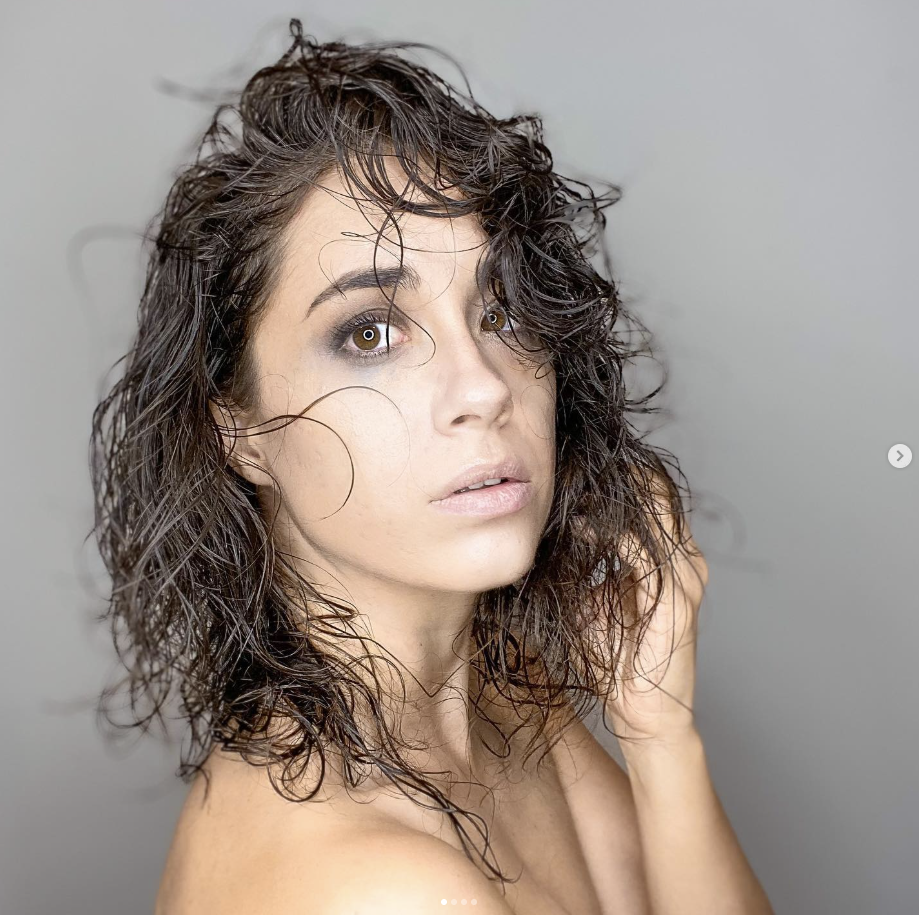
Photo Courtesy of Elana Swartz
Can you remember the first character that felt unexpectedly personal?
The first one that comes to mind is Belle from Beauty and the Beast. It sounds funny because it’s Disney, but I was in high school when I played her, and she meant far more to me than I realized at the time.
Back then, I was very much a rule follower. There was a plan for life, and I believed you were supposed to stick to it. You didn’t question it. You didn’t wander too far from it.
What I loved about Belle was that she wanted something beyond what everyone expected of her. She wanted adventure. She wanted to see the world. She was curious. That resonated with me immediately.
I also connected deeply with her relationship with her father. I was a complete daddy’s girl, and my dad has always been wonderfully eccentric. I realize now, Belle represented something I hadn’t fully admitted to myself yet.
She wasn’t rejecting the life she’d been given. She was simply aware there was something larger waiting for her. I think I felt that too. I just didn’t have the language for it yet.
Is there another character you’ve played that stayed with you long after the performance ended?
Hero from Much Ado About Nothing is another character I think about often. People sometimes describe Hero as passive, as someone without agency. I’ve never seen her that way.
To me, there’s a difference between being naïve and choosing optimism. Hero has experienced loss. She’s lived through conflict. She understands that the world can be cruel. And yet she continues to believe in people. And yet she continues to believe in people. She continues to choose hope.
I find that incredibly brave. When I look back at the characters I’ve connected with over the years, I realize they have something in common. They’re dreamers. They believe life can become something better than it is today.
I think that’s why they’ve always spoken to me. I want to believe that too.
As you’ve grown as an artist, has your definition of success changed?
Completely. When I was younger, success mostly meant getting the role. Getting the opportunity. Being cast.
Now I think much more about how the work gets made. I’ve realized I don’t want to create great art at the expense of the people creating it. You hear so many stories about brilliant productions that leave everyone exhausted, burned out, or emotionally devastated. I don’t think excellence has to come at that cost.
I want to work with people who care deeply about the craft, and who also care deeply about each other. The older I get, the more important that becomes.
I’ve also learned that I have to leave the work at work. As an actor, it’s easy to carry a character home with you. But my husband didn’t marry all of those characters. He married me. I owe it to both of us to come home as myself.
That’s become part of my practice too. Creating space between the work and the rest of my life. I want to make art that’s excellent. I want to make art that’s ethical. And I don’t believe those two things have to be in conflict.
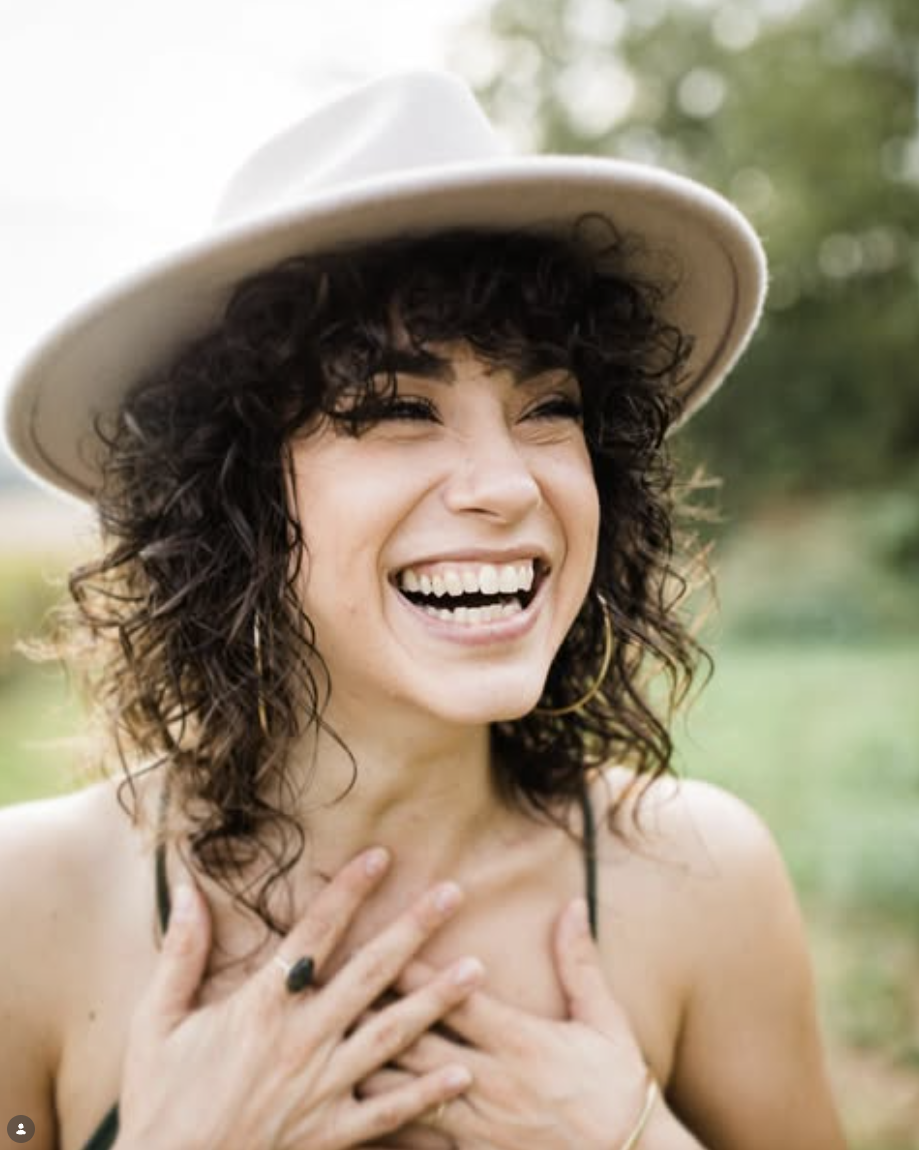
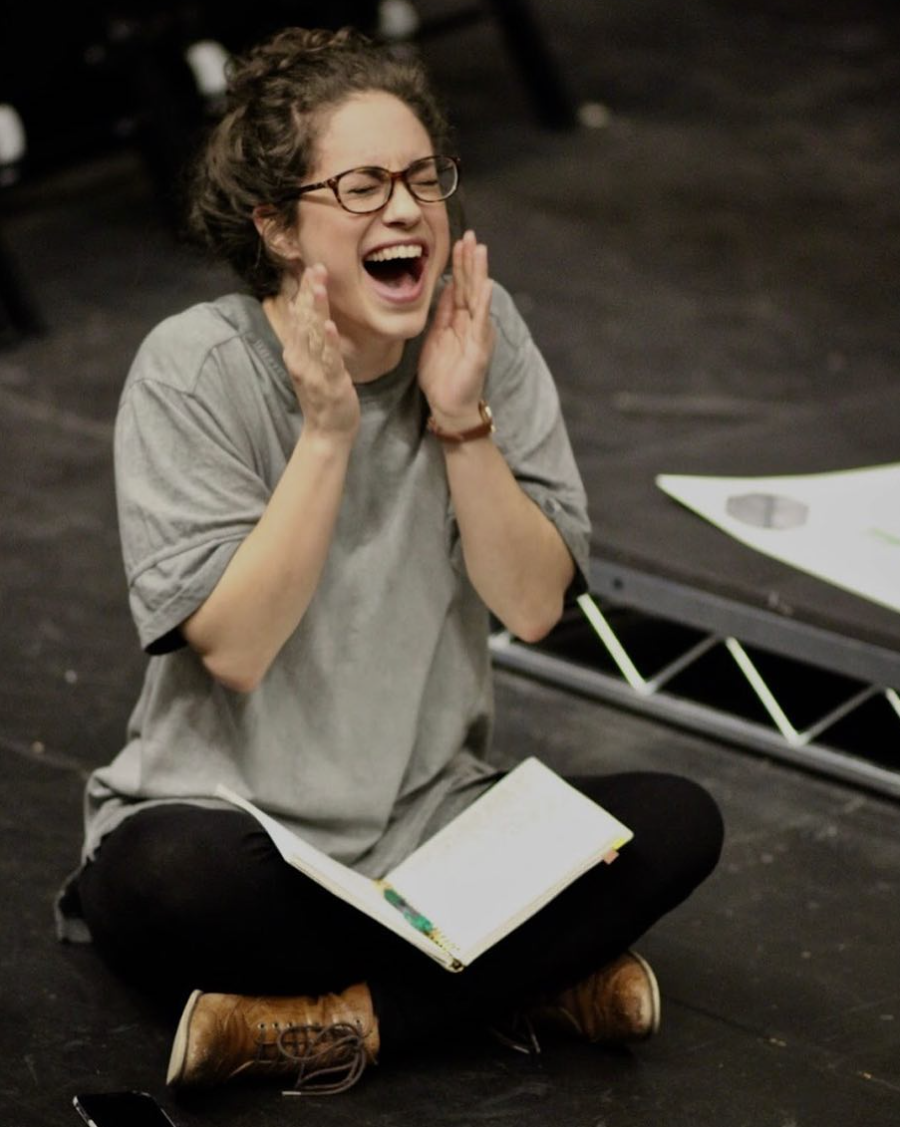
Photography by @littlemountaincreative.co
What do you think people misunderstand about creativity?
I actually think that’s one of the biggest misconceptions people have. We tend to think of creativity as something reserved for actors, painters, musicians, or writers. But creativity shows up everywhere. Creativity isn’t a profession. It’s a way of engaging with the world. I think every person has moments where they’re asked to imagine something that doesn’t exist yet.That’s creativity. It’s one of the most human things we do. Stories don’t only belong on stages. They belong everywhere people are trying to make sense of being alive.
What do you hope your future self thanks you for?
I hope she thanks me for not rushing. For trusting that life unfolds when it’s supposed to.It’s funny because when we started talking today, the Eight of Wands made me think everything was moving so quickly. And it is. My husband and I are starting a family. There are so many changes happening all at once. But I don’t want to look back someday and wish I’d hurried through the life we were building before that chapter began. I hope my future self is grateful for the foundation we created. For the time we spent becoming better partners. Better artists. Better people.
I hope she thanks me for choosing growth instead of urgency. For believing that preparing for the next chapter is just as meaningful as living inside it. Because one day I’ll look back on this season and realize... This wasn’t the waiting.
This was the life.
You’ve mentioned that you and your husband are starting a family. How has that changed the way you think about creativity?
It’s only expanding. I think I’m expanding what it looks like for me to be a creative and a mother. Not only am I literally creating a little person, but I’m exploring how I express the creativity of me, Elana, now that ‘mama’ is apart of my identity. My identity is continually being created; it is continuing to expand.
My husband and I waited a long time before deciding to start a family, and now that it’s finally happening, I keep thinking about all the reasons we chose to wait. We spent those years building a life together. Growing as partners. Growing as artists. Growing as people.
I’m grateful for that foundation. I don’t think we were waiting. I think we were preparing.
Art has always been such a huge part of my life, and I wanted that part of me to feel grounded before adding the beautiful chaos of raising a child. Now it feels like those two worlds are finally ready to meet.
The thing that excites me most is sharing creativity with them. I grew up surrounded by storytelling, imagination, and play. I hope I can pass that along.
Because creativity isn’t just about becoming an artist. It’s a way of understanding yourself. It’s a way of processing the world. It’s a way of finding comfort when life feels overwhelming.
If I can give that to my children... I think they’ll always have a place they can return to.
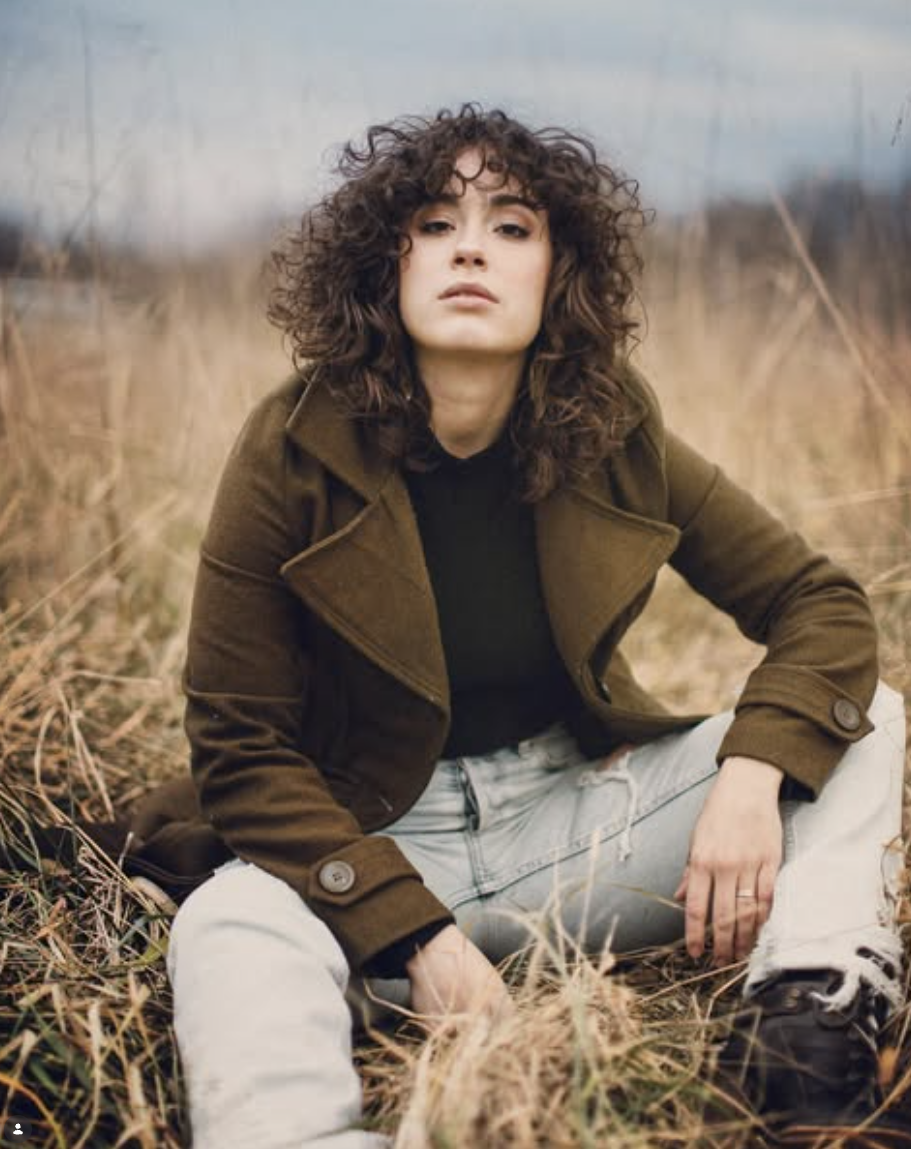
Photography by @littlemountaincreative.co ⠀
Before I let you go, can you tell me about a conversation you’ll never forget?
The first conversation that comes to mind actually isn’t one where I remember every word. It’s one I remember because of how it made me feel. My mom and I were talking about the kinds of women I could play as an actor. At the time, we were discussing different roles and different stories, but what stayed with me wasn’t the list of characters.
It was the realization that I didn’t have to fit into one version of womanhood. I could be funny. I could be serious. I could be adventurous. I could be complicated.
That conversation quietly expanded what I believed was possible for myself.
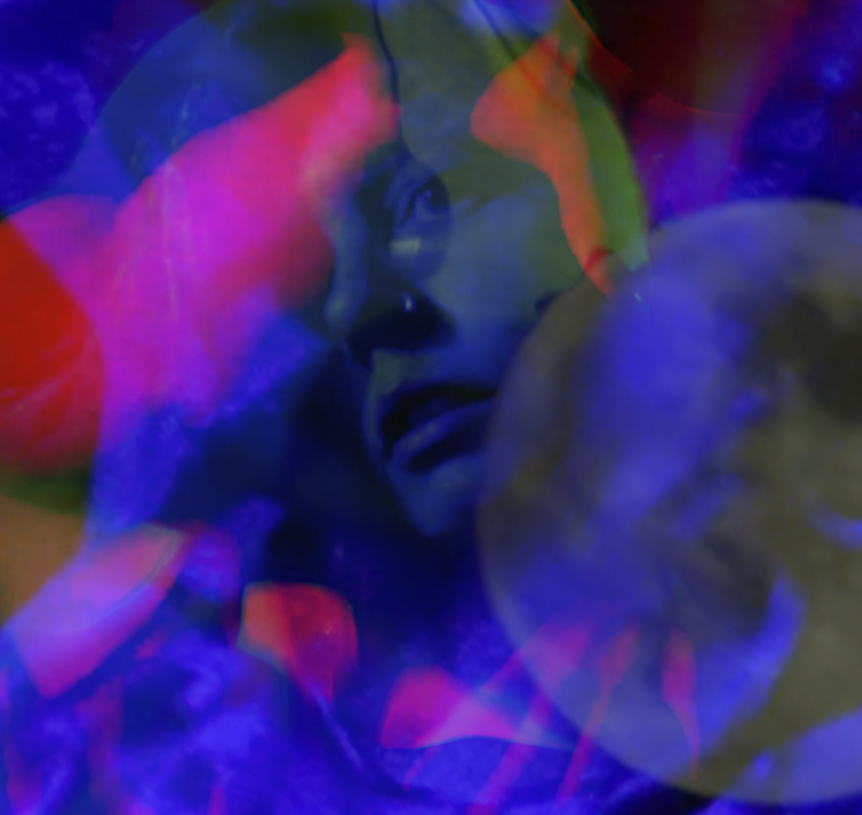
MAURA COTTER
FILM
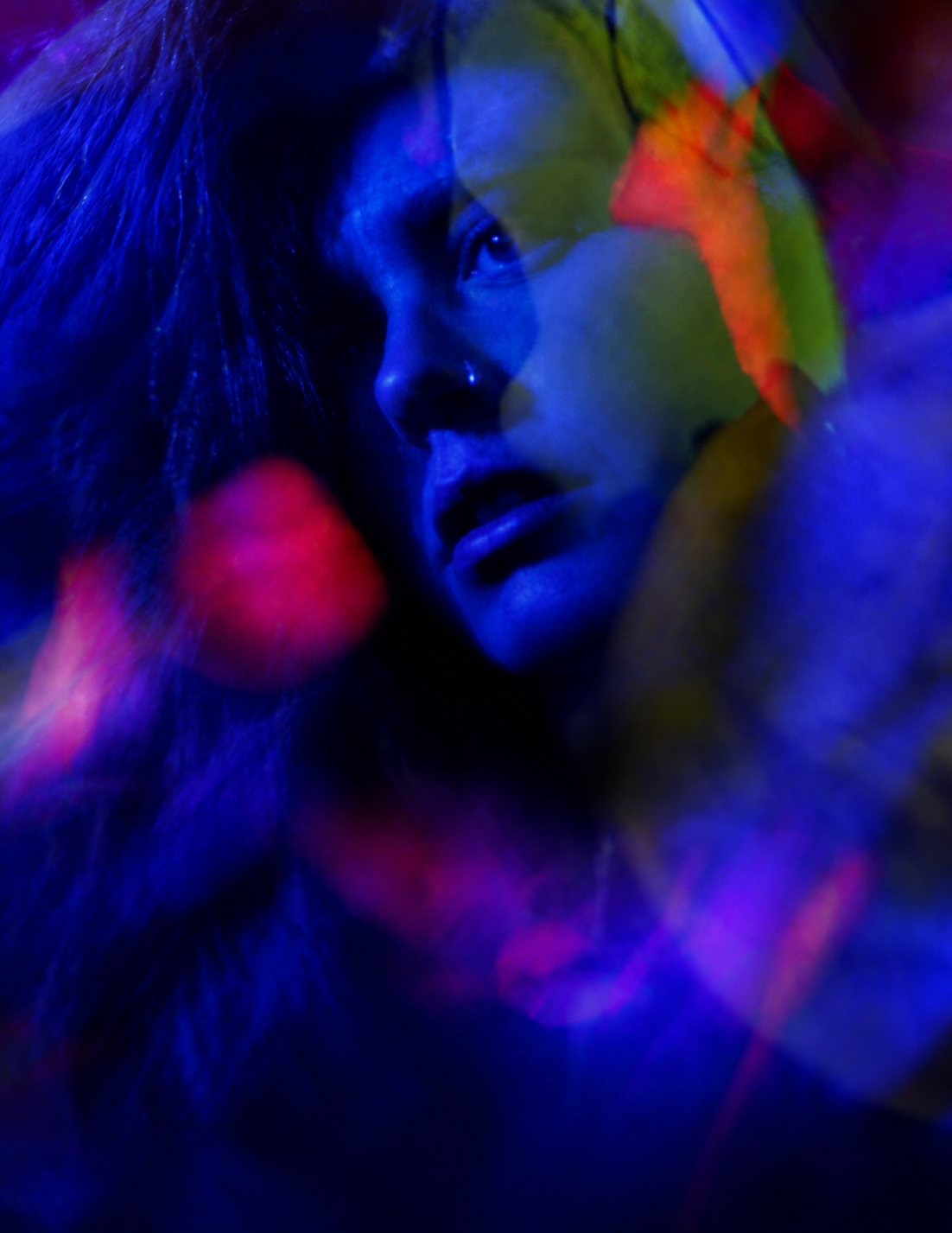
MAURA COTTER IS SEEING THINGS DIFFERENTLY
FILM / INTERVIEWED BY LAUX | AUGUST 2026
IMAGERY VIA
MAURA COTTER
I pulled the Four of Cups when I was thinking of you.
The Four of Cups represents reflection, contemplation, and learning to see the world in a new way. Traditionally, it’s a card of quiet introspection rather than action. It reminds us that some of life’s greatest shifts happen not because the world changes, but because the way we see it does.
Its highest expression is presence, gratitude, emotional clarity, and recognizing beauty in the ordinary.
Its shadow side is apathy, emotional withdrawal, taking things for granted, or overlooking unexpected opportunities.
Can you tell me about a moment when you started seeing the world differently?
The first thing that comes to mind is when I studied abroad in Mexico. I decided to stay for an entire year instead of just a semester. By then, I had already started my journey in activism. I was involved with the Campus Anti-War Network, considered myself pretty radical, and was already questioning a lot about the government.
But living in Mexico completely changed my perspective. Very few Americans studied abroad there, so most of my friends came from Europe, Australia, or Mexico. I had one older gay friend from Portland, but everyone else came from completely different backgrounds.
Meeting people from all over the world made me realize what I now think of as one of the biggest lies we grow up believing: That America is the greatest country in the world. It’s almost embarrassing for me to admit now because I already considered myself politically radical, yet I had still absorbed that belief. There are so many incredible things about this country. The landscapes. The creativity. The music. The art. There are so many beautiful things here.
But there are also countries doing many things far better than we are. Whether it’s healthcare, workers’ rights, women’s rights, or simply how people experience everyday life, I realized we’d been taught to see America through a very narrow lens.
That experience opened another question for me: What other things had I accepted simply because I’d been taught them since childhood? We recite the Pledge of Allegiance as kids. We grow up surrounded by this constant message that America is exceptional. It wasn’t until I lived somewhere else and heard other people’s stories that I realized how deeply that idea had been planted inside me.
That year completely changed how I understood the world.
I’d love to know what kind of kid you were growing up.
I was always performing.
I didn’t come from a family of artists. My dad was a police officer. My mom was a nurse. My aunt and uncle were lawyers. But creatively, I always had this performer energy. Even before I discovered musical theater in second grade, I loved taking photographs. My aunt always had those disposable cameras, and I’d spend hours asking her to photograph me posing around her house, dressing up in different outfits and creating little characters. Looking back now, I think creativity was just always looking for a way out.
My childhood still feels very alive in my memory.
What was little Maura imagining?
A couple memories come to mind immediately.
One was my collection of stuffed animals. I used to line them all up on my bed and pretend I was their teacher. I had this giant world atlas filled with photographs from different countries.
I’ve always had a nomadic heart. Even though I didn’t travel much as a kid, I loved imagining different places. Before I could even read, I’d flip through the atlas and “teach” all of my stuffed animals about the countries by describing the photographs.
Another memory is my best friend growing up. Her parents were artists. They met in college studying acting. Her dad became a drama teacher, and her mom created a children’s music program called Music Garden. Their house felt completely different from mine. I spent a lot of time there. One year, for Halloween, we decided to dress up as Miracle Max and Valerie from The Princess Bride. We made everything ourselves. We cut fabric, sewed our own costumes, and her dad even helped us sculpt prosthetic noses. I remember leaving my own classroom so I could celebrate Halloween with her class instead because I wanted us to stay together. My teacher wasn’t very happy about it.
Who made you feel seen when you were young?
My Aunt Peggy.
She’s always been like my second mom. My parents had a pretty tumultuous relationship growing up, and my mom carried a lot of anger. She’s come so far since then, but as a kid there was a lot of rage in our house. Whenever things became overwhelming, I’d run away to my Aunt Peggy’s house. She never had children of her own, and I always felt incredibly safe with her. She was constantly encouraging my creativity. She was the one taking all those photographs of me. She was always willing to play along with whatever imaginative world I wanted to create. When I think about becoming a mother myself, and how I sing Rowan to sleep now, I realize Aunt Peggy was the person who did that for me. She had these little songs she’d always sing. One of them was: “Mares eat oats and does eat oats and little lambs eat ivy...”
Those memories have stayed with me.
Now that you’re a mother yourself... after spending time with your mom recently, do you find yourself seeing her differently now that you’ve become a parent?
Definitely. I’ve been thinking about my mom in a completely different way.
She lost her mother when she was three years old. Her mom died during childbirth while having their eighth child. The baby died too. My mom was only three. My uncle was two. They would stand at the front door crying because they couldn’t understand why their mother wasn’t coming home. My grandfather was a raging alcoholic and now they had no mother to shield them. I think about that little girl all the time now. She’s never really recovered from losing her mom. She still mourns her every day.
Being a parent myself has made me understand that grief in a way I couldn’t before. While we were visiting Chicago, something happened that also helped me understand my mom better. My dad has never been great with time. He’s probably autistic, although he’s never been diagnosed, and he’ll often say he’s coming somewhere and then show up an hour or two late without responding to anyone. It’s always driven my mom crazy. This trip was the first time I truly experienced what that feels like myself. He was supposed to pick us up. We accidentally left Rowan’s car seat in his car after the airport. I wasn’t worried because I knew he was picking us up the next day.
At 12:18 he texted that he was going to take a shower. I figured he’d be a little late. Instead, he was over an hour late. I called him several times. He didn’t answer. I could even see on Find My that he was still sitting at home. I became so frustrated. Then suddenly I understood. This is what my mom has been living with for decades.
I finally experienced the same feeling she’d always described.At the same time, something else has changed since Rowan was born. Both of my parents used to confide in me about their relationship. I often felt caught in the middle of their marriage. Since becoming a mom, my mom has almost completely stopped involving me in their conflicts. She’s made a real effort to let me simply be a parent instead of trying to parent them. That means so much to me.
Looking back, I realize I spent much of my childhood emotionally taking care of my parents. Both of them experienced tremendous loss. My mom lost her mother. My dad lost both of his parents and his youngest sister in a car accident shortly after my older sister was born. They each carried enormous grief. As a child, I naturally stepped into trying to care for them. Now they’re finally allowing me to focus on caring for my own child instead.
That feels like a huge shift.
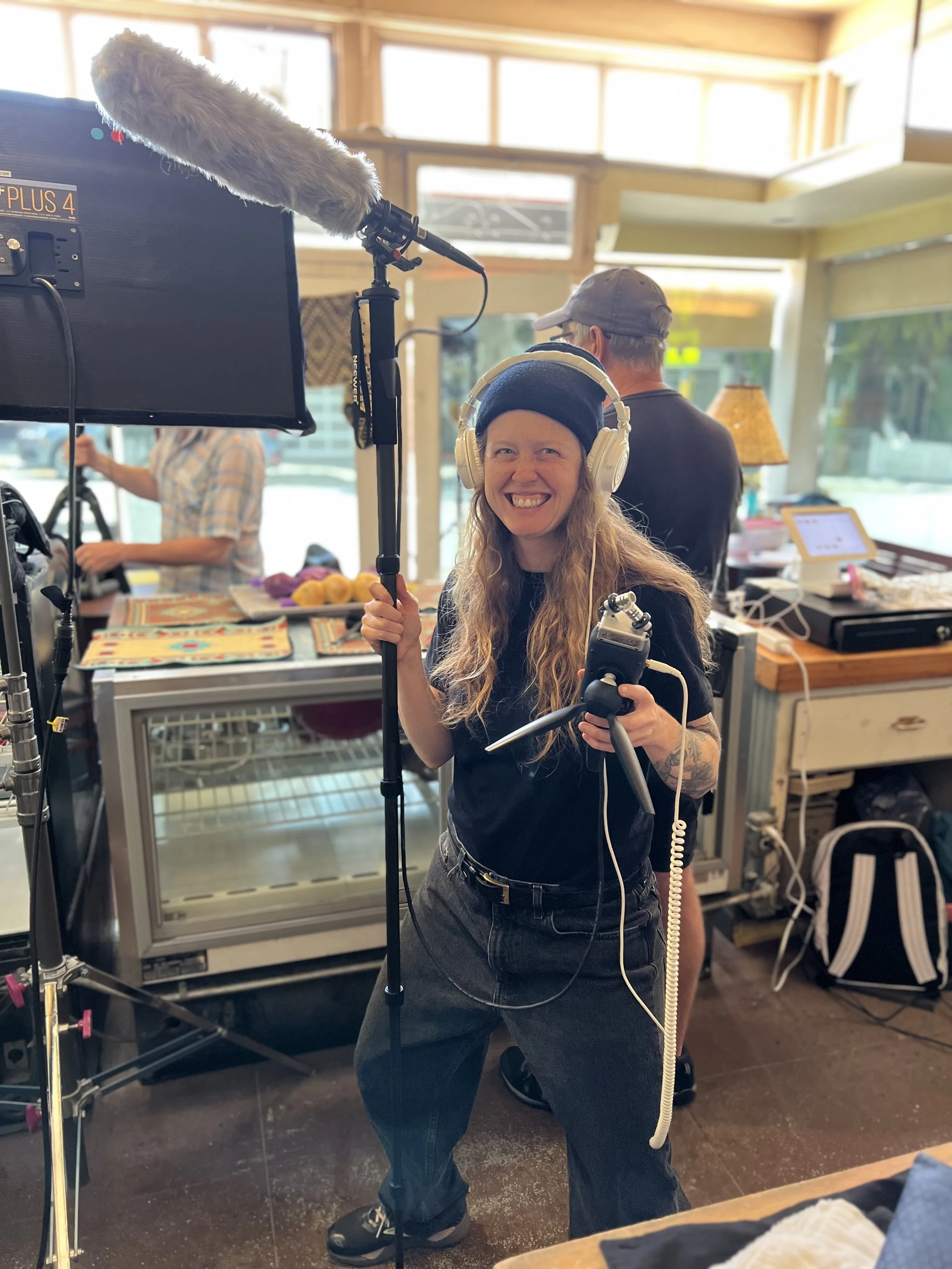
One thing I’ve always admired about your work is how experimental it is. You’re such a tactile filmmaker. We’re both filmmakers, but our work couldn’t be more different. I’ve always been fascinated by your creative lens.
I think I’ve always loved weird things. I’ve always been drawn to visual art. Experimental filmmaking gives me permission to play. I get to explore color. Sound. Texture. Patterns. There’s so much freedom in it.
I’m sorry to interrupt, but something just clicked for me while you were talking. You’ve been a rule breaker your whole life. You became an activist. You questioned systems. You traveled. You learned the rules......and then broke them. I almost feel like experimental filmmaking is another version of that.
I think you’re right. I’ve always felt like part of my purpose is to think outside the box. When I was younger, that looked like activism in the streets. Now it looks different. Now it’s donating money to organizations. Trying to help in different ways. As Rowan gets older, I want him to experience those things too. I want him to understand that caring about other people matters. I don’t necessarily need to express that only through protests anymore. I hope my artwork can become another way of carrying those ideas into the world.
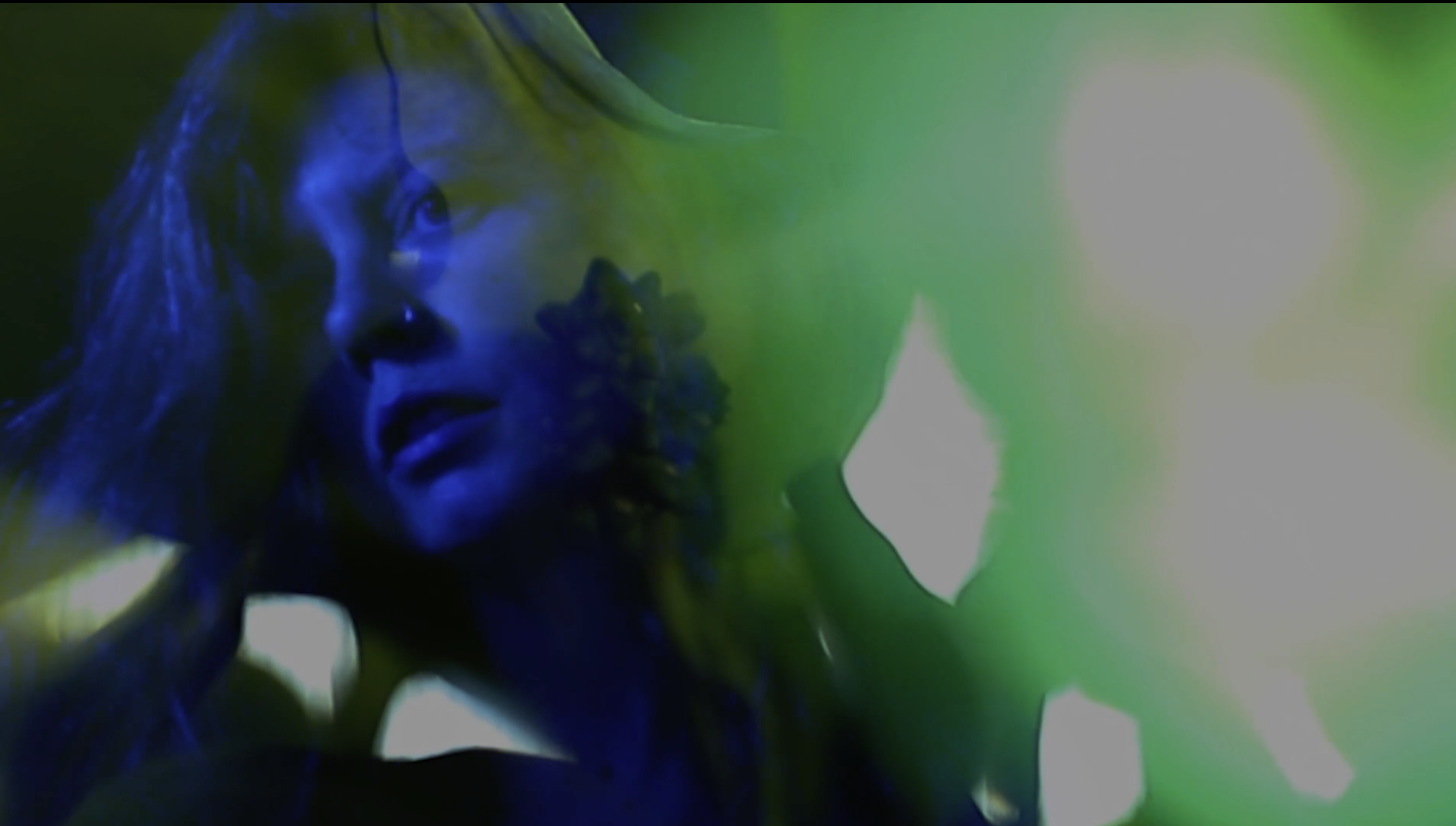
When people watch your films... what part of you are they getting to know?
They’re definitely getting to know my silly side. I love comedy. I love playfulness. I love making people laugh. But they’re also getting to know how deeply I love beauty. Nature is probably the biggest influence on my work. I care deeply about animals. Plants. All of our non-human neighbors. So many people experience nature as background scenery.
For me, it’s the opposite. The trees. The birds. The plants. They’re the main characters.We live near Golden Gate Park, and I love walking through the Panhandle. Sometimes I’ll stop and think about how long those trees have been there. They’ve watched generations of people come and go. They’ve seen the city constantly change around them. Their lives unfold on an entirely different timescale than ours. That perspective fascinates me. California’s landscapes inspire me every single day.
What story do you still feel called to tell?
I think right now... the world feels incredibly heavy. There’s so much anger. So much cruelty. So much darkness. Especially in this country. Because of that, I want my work to become a beacon of love. I want to continue creating things that remind people to care for one another. To love one another. To raise kind children, even during difficult moments in history. That’s where I hope my work continues to grow.
Lately I’ve been dreaming about making films with Rowan. I have a Super 8 camera, and I keep imagining taking him into Golden Gate Park. Filming him in nature. Playing. Growing. Discovering the world. Those are the kinds of stories calling to me now. They’re quieter. More intimate.
But they feel incredibly important.
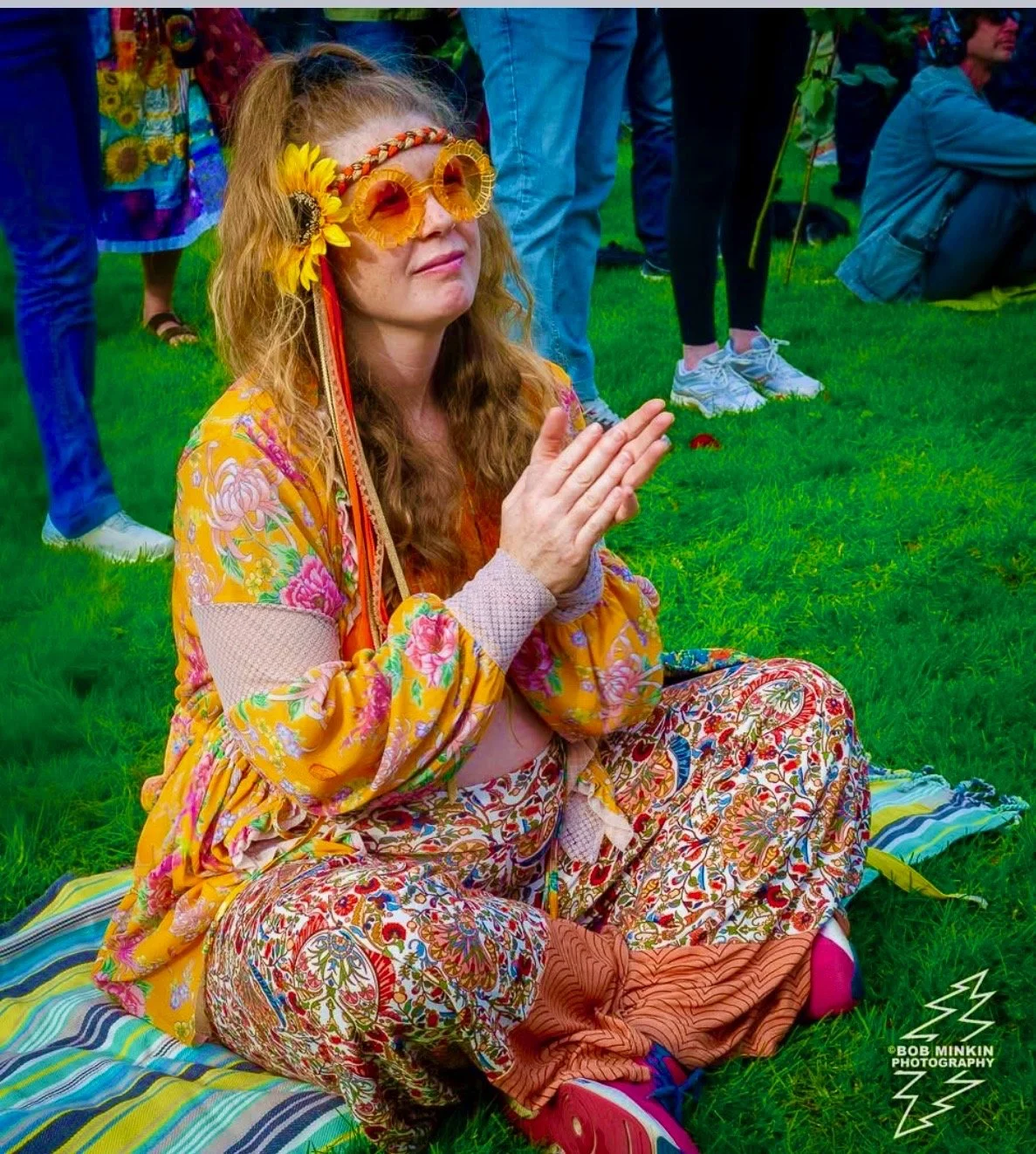
What do you hope your future self thanks you for?
I hope she thanks me for living a full life. A life filled with friendship. Love. Exploration. Adventure. I hope she thanks me for choosing to surround myself with people I love and for trying to be a warrior of light in this world.
EM MARINELLI
WRITER / DANCER
EM MARINELLI: THE STORIES THAT FIND THEIR WAY BACK
AUTHOR / DANCER / INTERVIEWED BY LAUX | AUGUST 2026
IMAGERY VIA
@EM MARINELLI
For Em, we pulled The World. It’s associated with contemplation, integration, and reaching a point where you can look back and understand how different parts of your life came together. Let’s begin here...
Can you take me to a moment when you realized you had completed one version of your life and were stepping into another?
Pulling The World is such a huge card and a huge honor because it’s the completion of the whole cycle, starting with The Fool’s journey and leading into this place of culmination and integration. My first feeling about it is, okay, girl. You see me. It feels like the cards are reading correctly how I’m feeling right now in my life.
It’s not that things are done or over. That’s not how The World works. That’s not how trauma works. That’s not how art works for me. It’s more that I’m at a place where I’ve gone through some shit, and now I’ve landed in a different, more transpersonal field in my life, and geographically a different place in my life.
I think about spending time in Vermont, changing my relationship to substances, starting to go to Al-Anon and ACA, moving from a lot of drug years to dog-country-life years. I also think about injury and trauma around my dad, and the challenges I’ve held onto since I was a kid of always wanting something from him that he was unable to give.
The World really speaks to this time I’m in right now.
I want to go back a little and start with who you were before the world started telling you who you were supposed to be. When you were a kid, what kind of adventures did your imagination take you on? What kind of worlds did you create?
I always wanted to be a dancer, and I specifically wanted to be a dancer in Gene Kelly movies with MGM.
I wanted to either be his sidekick dancer or just a little girl in the background of An American in Paris, one of the French kids following him around going, “I got rhythm.” I really built this world through musicals, particularly old musicals. Pop culture was always a way for me to escape and also to feel seen and found at the same time.
My imagination always took me there.
I’m always interested in the art that finds us before we fully understand why it matters. Can you remember a piece of art, writing, music, or film that entered your life at exactly the right time and never left?
I was really lucky that my mom put me in dance starting when I was two and a half.
I started with tap and ballet, then later jazz and modern. That was such a gift she gave me because dance was always a place where I could feel safe and escape when things at my house were not feeling safe. I could have an artistic expression and a way to move through difficult emotional experiences.
Then, speeding up to when I was a teenager, I saw My Own Private Idaho. That piece of art completely changed me, and I never looked back. I started really understanding independent cinema. I started understanding my queerness in a different way through River’s portrayal of Mike. It also connected to my love of realism in movies. When I see realism, that’s the thing that makes my fingers tingle and my heart jump. I feel transported into some other transpersonal space.
That’s what I find in directors like Gus Van Sant and Gregg Araki and other independent filmmakers.
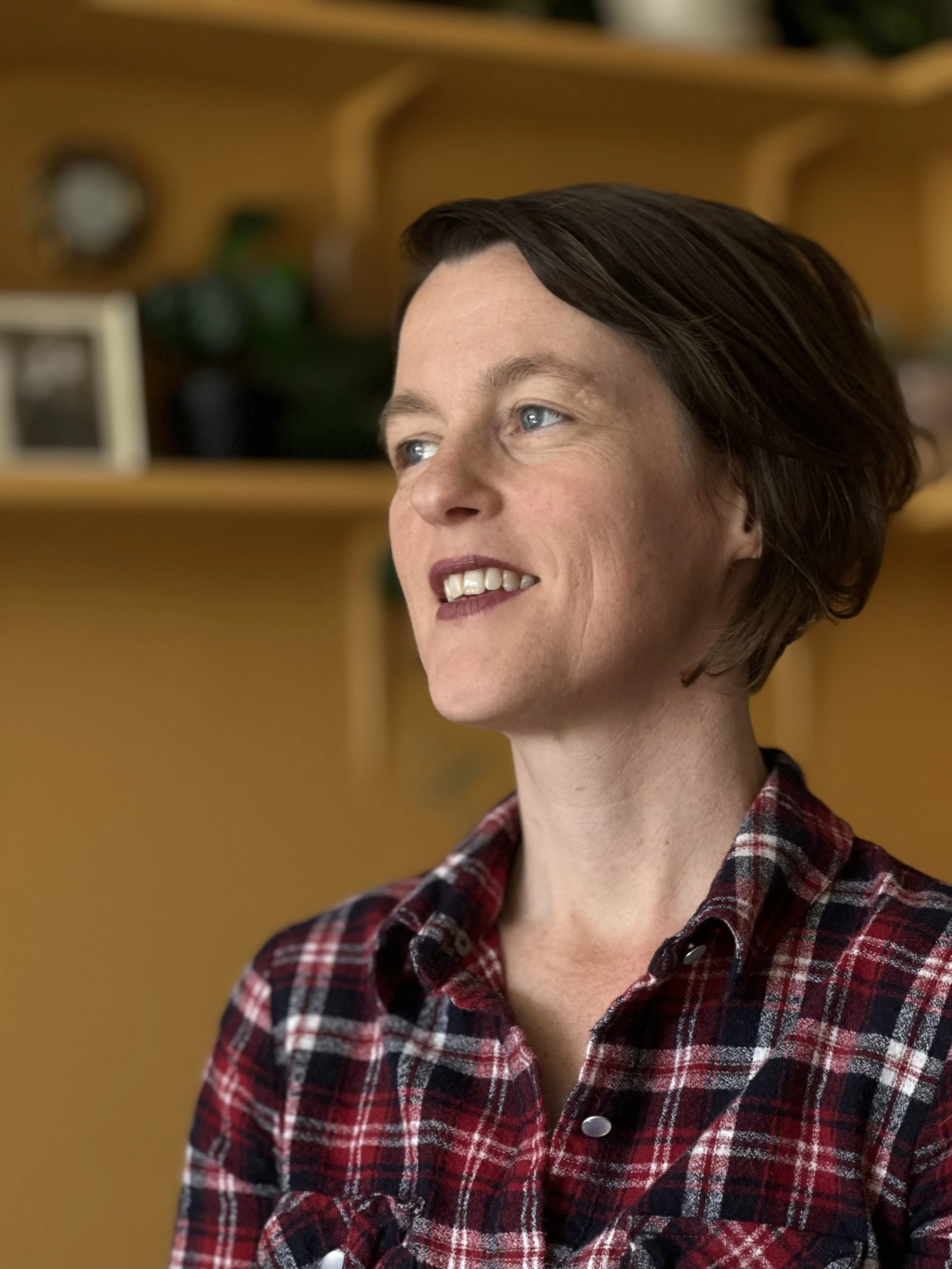
Photo courtesy of Em Marinelli
Can you remember an early experience of desire, intimacy, or connection that changed the way you engaged with art or your own creativity?
This morning I was working on my memoir and writing about a girl who was probably my first really big girl crush, celebrities aside. She began a series in my lifetime of being crushed out on very bossy redheads.
I was writing an essay about us when we were young because she was the person who showed me My Own Private Idaho for the first time. She showed me Stand by Me. She introduced me to Twin Peaks. There’s this interlocking of my crush, my energy, my desire to be close to her, and then her bringing me into this world that completely changed how I thought about everything.
It influences my writing. It influences how I engage with movies, shows, and pop culture generally. I mean, I’m writing a book about Twin Peaks now.
There’s this absolutely crazy connection between all of those things.
Some of the things that shape us most are the things we wouldn’t necessarily choose. Can you tell me about a heartbreak that changed you? What did it teach you about yourself?
What came to mind was a dual heartbreak.
The first was with an abusive person I was with when I was in college. He was a cis guy much older than me, and it was a classic cycle of abuse that I didn’t know how to get out of. Which was hilarious because I was a Women’s Studies major and literally teaching this stuff to other people. It was that experience of knowing something intellectually but not being able to do it for yourself.
I went to a lot of therapy in college, and eventually was able to leave him. There was heartbreak in looking back at myself and thinking, am I really that statistic where it takes seven times to leave a relationship like that? I guess so.
That was heartbreak for myself, not even about the person.
At the same I was unhooking from the abusive relationship, I met a hot butch and feel deeply in love. I went pretty quickly, probably too quickly, into a relationship with her. I came into myself being with her. She helped me realize I was a femme and what that really meant. That relationship became its own beautiful mess, but it was the most significant partnership I’ve had other than the relationship I’m in now. The only other partner I ever lived with. When her and I finally parted ways, I had said and done so many hurtful awful things to her I couldn’t see any world where we could be in each others lives.
Fast forward 20 something years later. She has transitioned and uses he/him pronouns. I was able to reconnect with him and make amends. We were able to acknowledge how I had hurt him and how he had hurt me. We cried together. We forgave each other. I remember him saying, “We were kids. It’s okay.” It was probably one of the most healing heartbreaks and heart connections I’ve ever had. Now I feel this drive to write about it because it’s become more accessible to me.
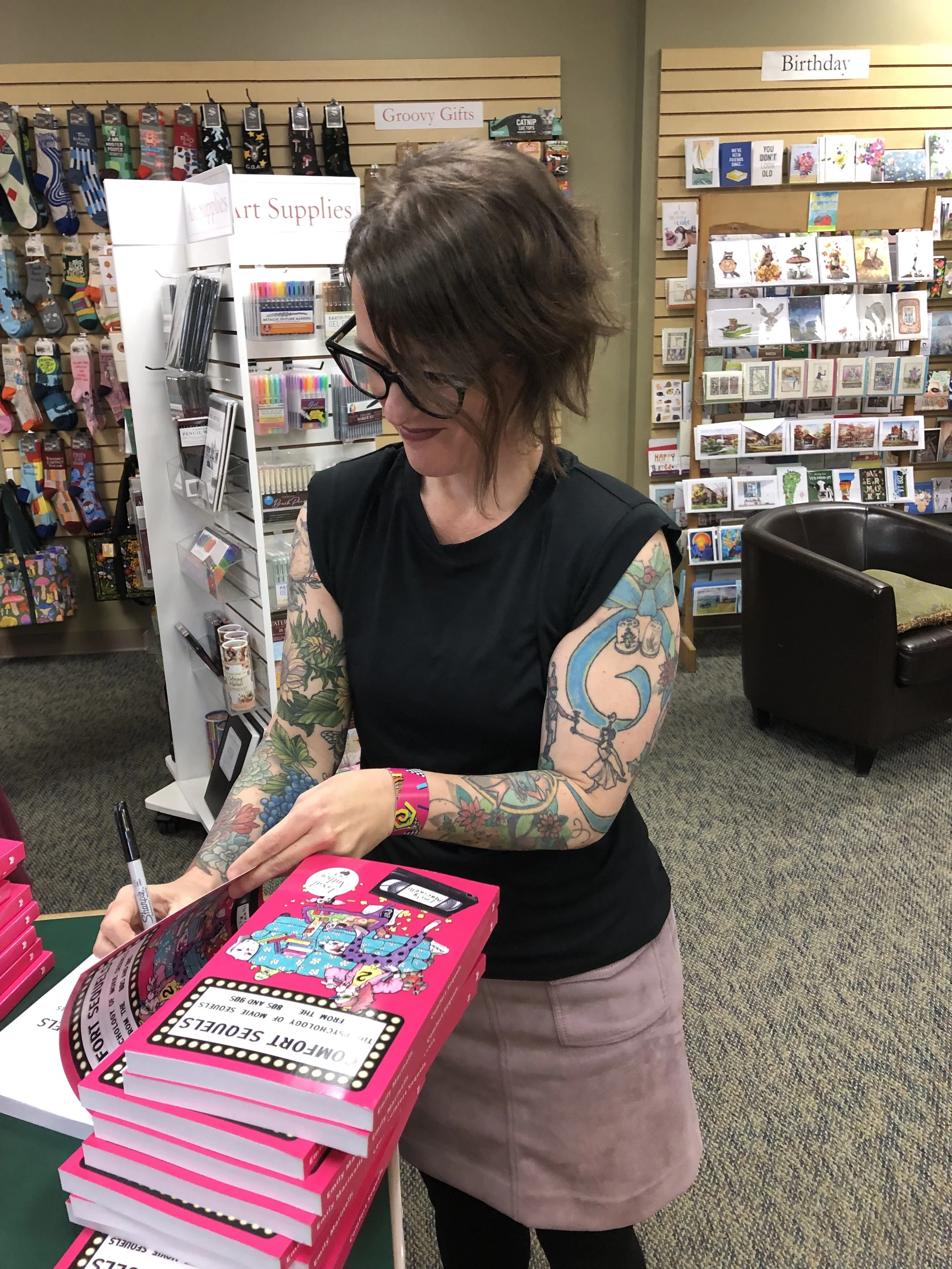
Photo courtesy of Em Marinelli
Sometimes the moments that stay with us aren’t big ones. They’re small ones. Can you tell me about something seemingly small someone did for you that had a huge impact on your life?
When I was a kid, I wanted to perform. I was performing through dance, but I wanted to really immerse myself in the performing arts, and I was terrified. Being onstage dancing felt really different from being in a play or singing in front of people. I found more comfort in dance.
My friend Rachel George was doing community theater when we were in high school, and she very lovingly said, “I think you should audition.” I was like, “What? I would never get in. What are you talking about?” She said, “Just do it, and I’ll help you.” She helped me figure out what to do, and I did it. It was just the little gentle, loving push that I needed.
Then I did so many shows with that theater when I was in high school. And it wasn’t high-school-bullshit theater. It was legitimate community theater. We were working our asses off. We were doing Sondheim. Period. Sondheim when you’re in high school is a lot.
Doug, who ran the theater, didn’t treat us like we were teenagers. He treated us like adults, and we did adult work. That helped me grow. My confidence grew. I ended up singing onstage. I started wearing wigs and thought, oh my God, why have I never worn wigs before? This is glorious.
Then I started making my own stupid movies with a camcorder at home. I had always been putting on plays behind the scenes, and now I got to actually be at the front of the stage. It felt incredible.
Can you remember a time when you encountered a piece of art that moved you deeply? Why did it hit you so hard?
This answer is going to be really fucking weird coming from a queer artist. The very first musical I ever saw onstage was Jesus Christ Superstar at the Tulsa Performing Arts Center. My mom took me, and I fell in love.
I couldn’t believe it. I felt lifted out of my seat. I was crying immediately because I was so moved by the harmonies, blown away and captured in the story. And I had railed against going. I was like, “Mom, I don’t want to go see a fucking musical about Jesus.” We didn’t believe in Jesus in our house. We didn’t do God. We didn’t go to church.
She said, “This is really different. Trust me. It’s a rock musical.” I’m eight years old going, what even is that? Then I saw it and it really took me somewhere else.
I think that experience helped me later when Rachel gave me that nudge to perform in musicals. I had always been a musical-theater kid behind closed doors. Seeing that made it even more the case.
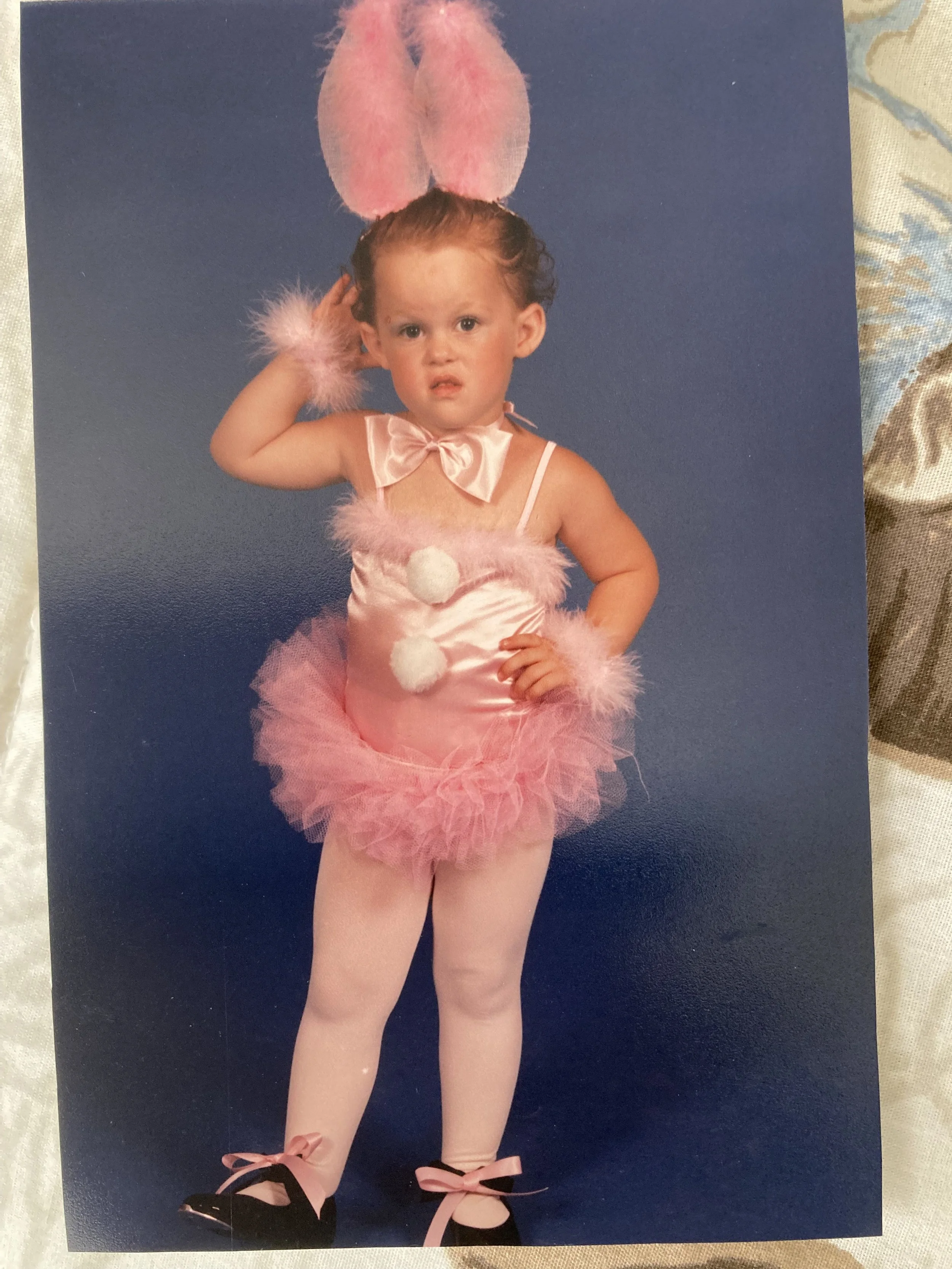
Photo courtesy of Em Marinelli
What are you able to say on the page that might be harder to say anywhere else?
In my creative nonfiction, writing gives me access to deep immersion and descriptions of moments in my life that, if you just asked me about them, I wouldn’t be able to tell you. When I write, I get to access that world.
I needed that for my last book, Comfort Sequels, particularly to write about my dad. I can’t really talk about my dad. I can say generic things. He was absent. This happened. That happened. But to write the stories that are difficult to say, writing creates access to that world. It helps create a kind of completion in the journey. Not because it’s done, but because it helps integrate it.
What I’m noticing now, as I’m working on my new memoir, is that there was a period when I couldn’t access the material around my dad anymore, even though I knew I had more to write. With support from writing communities and fellowships, including Lambda Literary, I’ve been able to go back into it.
I’ve also been feeling this call to write about some of my sexual trauma from when I was a kid. Every time I sit down to write it, I dissociate. Five words come out, and they don’t really make sense.
That’s an interesting other side of the question. There are things I can think about and know about, and maybe even talk about in an “everything was in the past” kind of way, but I can’t sit down and really access that world to write about it yet. But I’m saying yet because I’m not giving up on it.
What work feels most alive for you right now? What are you currently working on, and where did that project begin?
When I was a teenager, I loved this independent movie from 1996 called Trees Lounge. It was written and directed by Steve Buscemi, who also stars in it. If you haven’t seen it, many people haven’t. It’s amazing and shot so beautifully. They shot it in 24 days with barely any budget, and I don’t know how they did it.
It’s full of people you’ll know. Chloë Sevigny is in it. Carol Kane is in it. This year is the 30th anniversary of the movie, and I hadn’t seen much written about it over the years. I thought, I have to do something.
So I started reaching out. I didn’t know anyone. I cold-called people. I emailed agents and publicists. I tried to get as many people from the movie as I could, from the cast to the crew to the production side, and interview them about their stories from making the film. I wanted to capture it and hold it in this beautiful oral history.
I got to talk with the makeup artist, the production designer, and cinematographer Lisa Rinzler, who is such a wonderful artist. But I knew the book could not feel complete unless I got Steve Buscemi because it’s his baby. It’s an autobiographical account of a time in his life. On every level, it’s his work.
With the help and encouragement of Bianca Hunter, who is also in the movie and whom I’m now honored to call my friend, I kept trying. And I got Steve Buscemi.
Once I got Steve Buscemi, I was able to get Chloë and some other people. The book is called Trees Lounge: Behind the Bar. I just finished it, and it’s coming out this year.
There are stories in the book that have never been told before. Even if you don’t know the movie, you know Steve Buscemi. It’s about this time in his life when he was down and out, when he was drinking alcoholically, when the bar was the only place he could find connection.
It’s a movie about connection. The book is about connection.
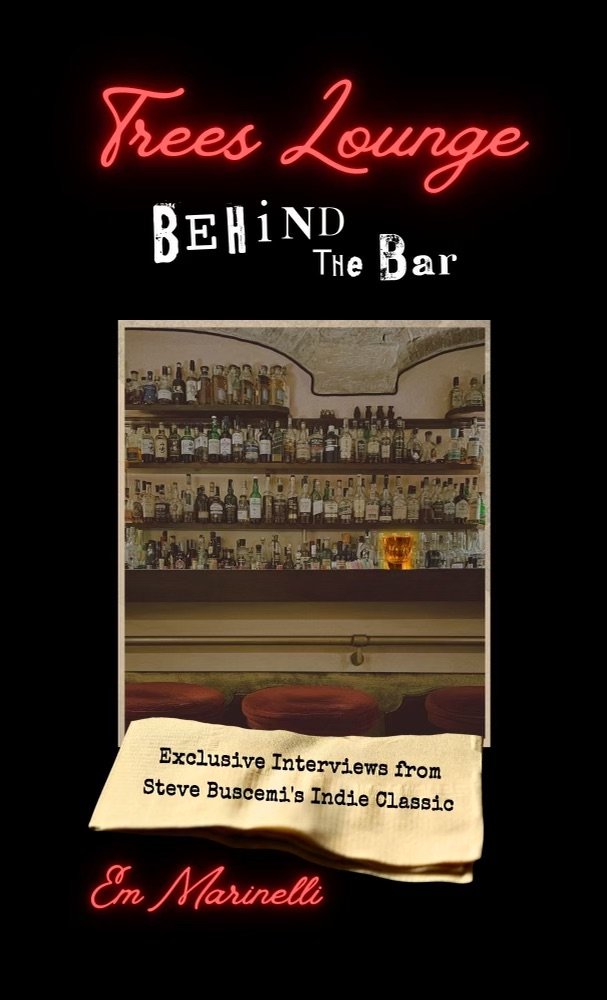
Photo courtesy of Em Marinelli
I’m also co-authoring a book about the TV show Twin Peaks called Fix Your Hearts: Transforming Trauma and Twin Peaks. It looks at the entire series, including Fire Walk with Me, through the lens of trauma healing, trauma resiliency, and trauma recovery. That will probably be out in 2027.
And I’m working on a new memoir. Some of the essays have already been published in different literary magazines. I’m going to keep going on this journey and see what stories of mine need to be told and how they’re going to find themselves on the page.
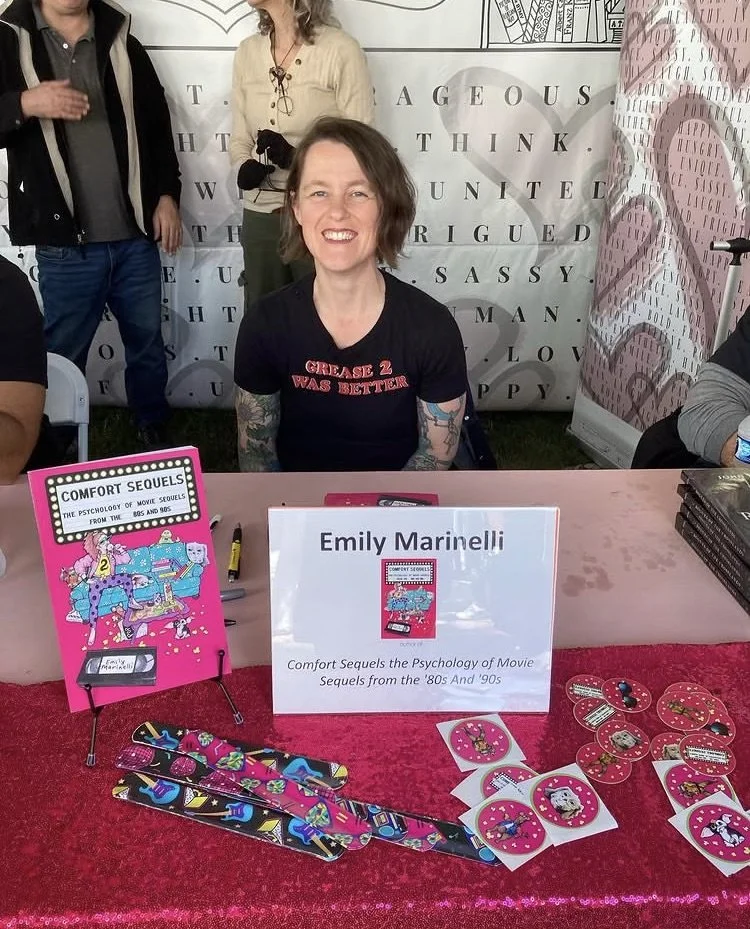
Photo courtesy of Em Marinelli
WHAT’S GOOD
We always like to end on a good note. So before we go, here’s WHAT’S GOOD according to Em Marinelli.
What’s a good book?
The Emperor of Gladness by Ocean Vuong. Everyone should read it yesterday.
What’s a good film?
My Own Private Idaho. River Phoenix, period. For me, it began what we know as queer independent cinema.
What’s a good song?
Anything by Dolly Parton. If you want to dance, I recommend “All I Can Do” or “Shinola.” If you want to sing, I recommend “Home” or “Two Doors Down.”
What’s something good someone told you?
A friend once told me, “Writing isn’t that precious. Write anytime you have a second. You don’t need the most perfect conditions to do it. Just fucking write.”
Who is someone good you think I should talk to next?
Persia. She performed at my book release party. She was one of the founders of Drag Queen Story Hour, she’s an activist, and she teaches drag and art to kids in an after-school arts program. I think she would be a great person.
XX MIXTAPE VOL. 01
Every QCH guest leaves us with one track. Em Marinelli adds this one to the mix.
wILL YOU DANCE
BY
THE BIRD AND THE BEE
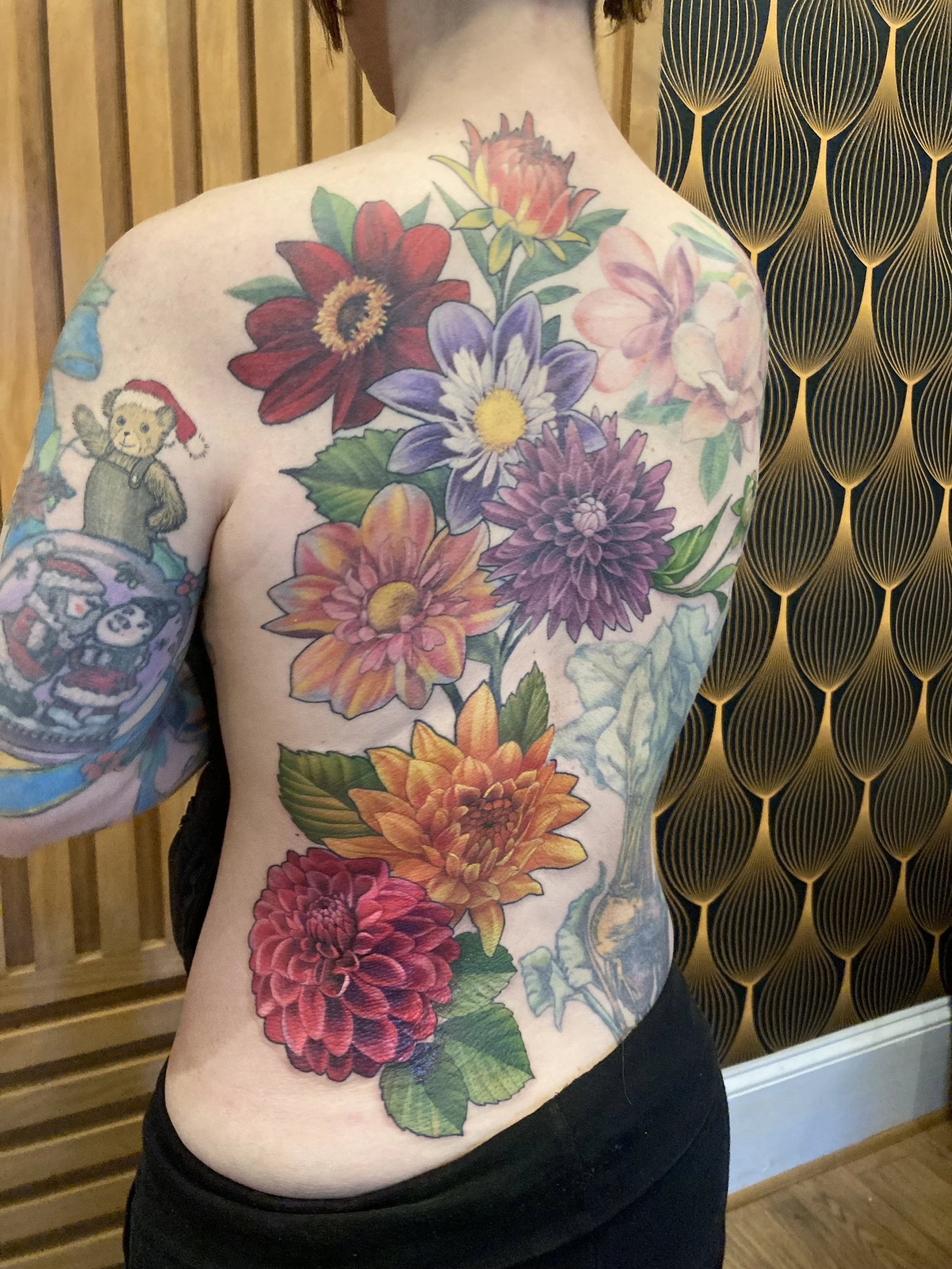
Photo courtesy of Em Marinelli
CURRENT / UPCOMING
TREES LOUNGE: BEHIND THE BAR
An oral history celebrating the 30th anniversary of Steve Buscemi’s Trees Lounge, featuring conversations with Buscemi and members of the film’s cast and creative team.
COMFORT SEQUELS
Part memoir, part pop-culture study, Comfort Sequels explores the restorative power of movie sequels from the ’80s and ’90s, weaving Em’s personal history with psychological insight and conversations with the people who helped make the films.
FIX YOUR HEARTS: TRANSFORMING TRAUMA AND TWIN PEAKS
A forthcoming exploration of Twin Peaks and Fire Walk with Me through the lens of trauma, healing, and recovery. Co-authored by Em Marinelli and currently anticipated for 2027.
COMING 2027
PODCASTS
THE TWIN PEAKS TATTOO PODCAST
Em talks with Twin Peaks fans about their tattoos, the stories behind them, and what the series continues to mean in their lives.
QUEER THERAPISTS TALK WAYWARD
Em and fellow queer/trans psychotherapist Avery unpack Netflix’s Wayward through psychological and queer lenses, exploring the show’s characters, themes, and representations of trauma.
REHEATED RIVALRY
Em and Mariana take a deep dive into Heated Rivalry, looking at the series through queer, psychological, cinematic, and pop-culture lenses.
PRESS + APPEARANCES
From author conversations and podcast appearances to film discussions and book panels, explore more of Em’s work and conversations across film, writing, psychology, and queer culture.
FOLLOW EM
BOBBY COYOTE
FILM
Photography by Stacie Buhler (@stacieabuhler)
BOBBY COYOTE ON AUTHENTICITY, TRANSFORMATION + WE FUCKING EXIST
MULTIDISCIPLINARY ARTIST / INTERVIEWED BY LAUX | AUGUST 2026
IMAGERY VIA
@bobbythecoyote
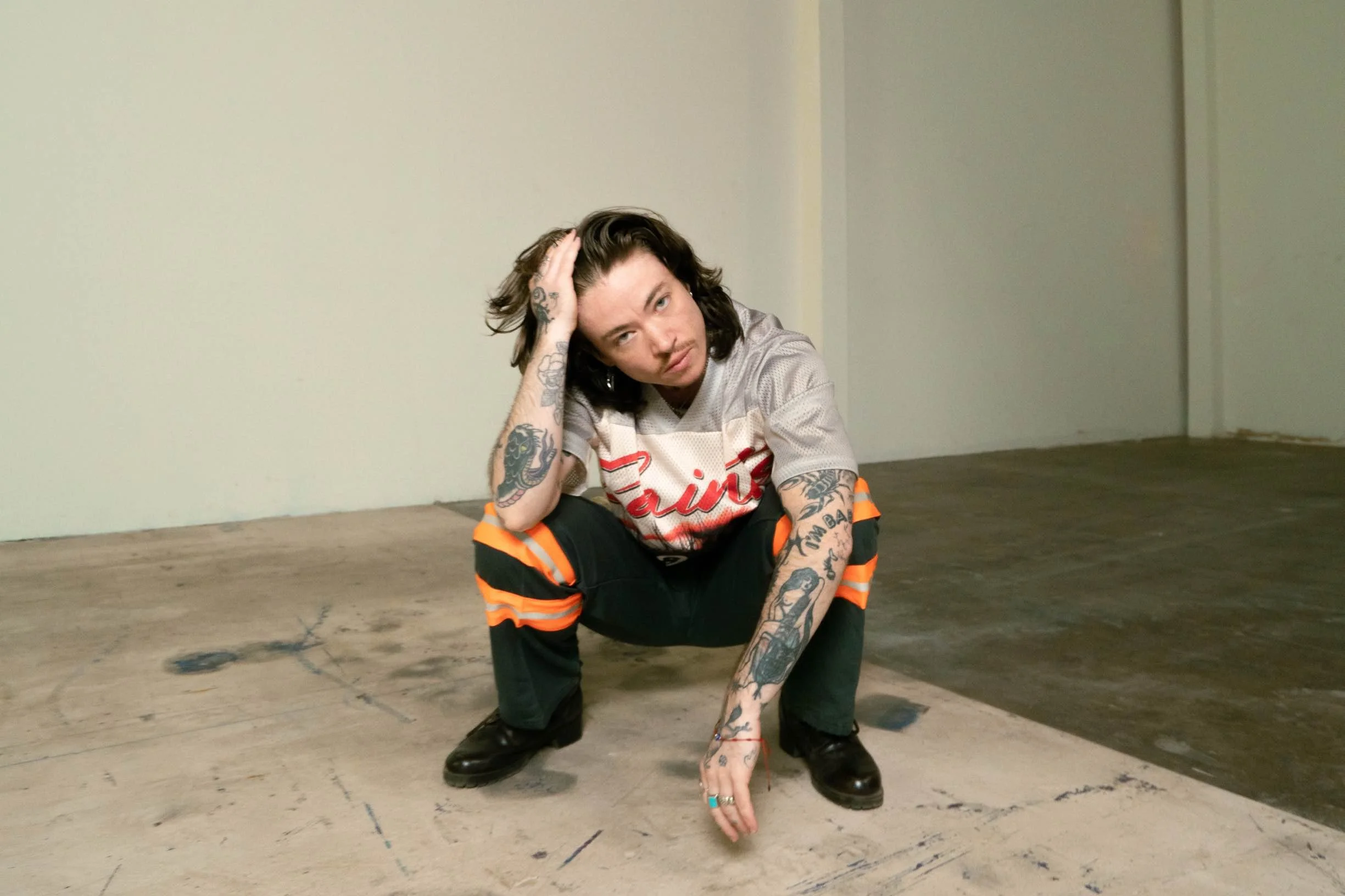
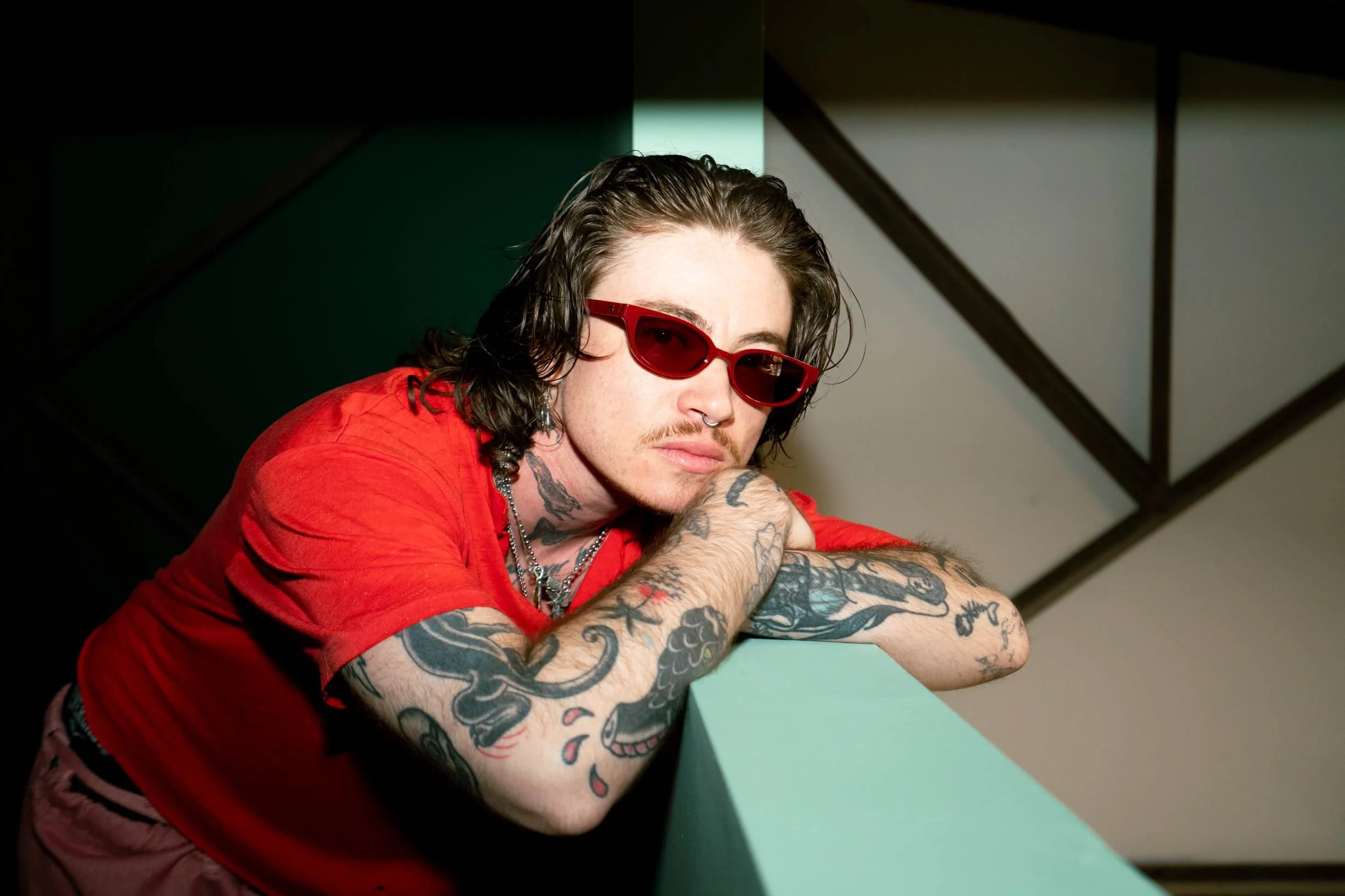
For Bobby, we pulled The Tower. The Tower is often associated with sudden change, disruption, and the collapse of something we once believed was stable. But it is also a card of revelation. Sometimes what falls apart clears the way for something more honest to be built in its place. Let’s begin here...
Can you take me to a moment in your life when something changed everything?
Probably the first time I really pulled The Tower myself. It was a few days before I had top surgery. I did a reading for what was coming up, and it was The Tower.
It was kind of the first time I really got it. I was like, okay, good change. I’m not going to be scared of it.
And then shit hit the fan really hard after surgery. Everything changed. My whole life changed. I had much more respect for The Tower after that. It’s a bittersweet relationship.
It was very Tower-like because at first it felt like catastrophe. It felt like my world was ending. But out of the ashes came something I actually ended up being really happy with. Maybe not the exact way it happened, but however it had to happen, it happened.
About five weeks after top surgery, I went through an unexpected breakup. I had been a pretty outgoing, social, party person, and afterward I isolated for about six weeks. I barely talked to anybody. I didn’t go out.
Through that, I figured out that I actually really like being alone. It was this huge shift where I realized, wait, I don’t need to constantly be out or surrounded by people to feel okay.
Getting out of that party mode gave me space to shift into a creative state. I’d always had ideas and bursts of making art, but there had been this block. Once I stopped going out all the time, I suddenly had all this focus to put toward creating.
That’s when I really started focusing on making music.
When you were a kid, what kind of imagination did you have?
Terribly rampant. Literally off the charts.
When I was about four, I wanted to be a dog. I was like, “I’m a dog.” I would shit in the backyard with the dog. I would eat dog food. I was committed to the bit. My parents basically had to potty train me twice. I loved animals. I wanted to be an animal so badly, and I would imagine all these scenarios where I was one. I was also really into sci-fi. Once I could read, I read a ton of sci-fi books, especially anything with dragons. I was convinced I was going to find a dragon egg. I still kind of hope it’ll happen.
I was very imaginative. I still am.
What’s something seemingly small someone did for you that had a huge impact on your life?
When I was little, my dad taught me not to squish bugs. It was this random little thing. I was probably four, and he was so upset by it that it really hit me. I was like, oh my God, that’s so bad. It instilled this deep respect for all life in me. To this day, I don’t like killing bugs. Everybody is just trying to get laid, get some food and do their thing. Who are we to interrupt that?
I’m struggling with some ants right now because I’m like, I don’t want to kill you, but also...
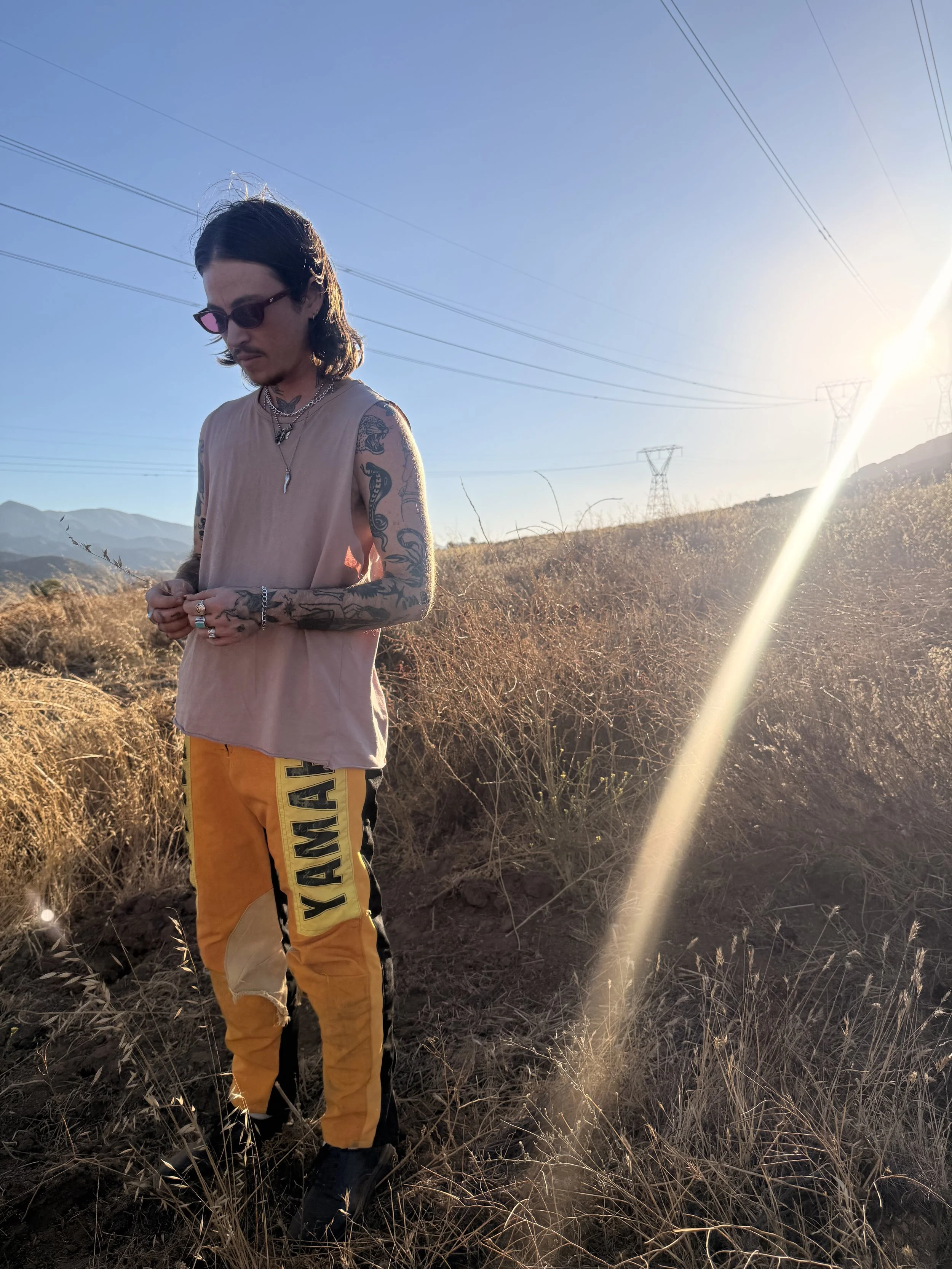
Photography by Devon Herrera (@devonherrera)
Can you tell me about a heartbreak that changed you?
The big one was the breakup I mentioned around my top surgery.
Going through top surgery made me have to ask myself, did that affect my relationship? How do I feel about that? This was something I really needed for myself, but this person needed something different for them.
Should I have withheld something I needed for myself? I’m not the kind of person to withhold my own anything.
Eventually I realized it was the right thing to happen, but it was really unexpected.
I had complications after surgery. I had a hematoma, so for about five weeks I had to go every other day to Thousand Oaks to have it drained. She would drive me an hour there and an hour back.
At my last appointment, she drove me there in silence. She wouldn’t talk to me. When we got back to my house, she gave me a breakup letter.
That was in 2022.
I actually found the letter again recently while I was moving. I’m a very sentimental person, so I keep things for a long time and sometimes don’t even remember I have them until I find them again.
Reading it after that much time, I picked up on different things than I did the first time.
But mostly I thought, I need to throw this away now.
Learning to let things go is a big thing for me. Being able to throw it away felt good. I already had a lot of closure from that relationship, but it felt like even more.
Can you remember a time when creating something helped you understand, process, or move through something in your life?
A couple years after that relationship and top surgery, I had gone through probably two years of situationships. Toward the end of that period, it all started compounding on me.
I went into a serious depressive mode and was dealing with suicidal ideation. At some point I said, okay, let’s just make a song. Sit down, make a song and stop focusing on all this external shit. I was housesitting for somebody at the time, so I wasn’t in my own space and didn’t really have much with me. I just had my iPad.
So I started making music. I got super into it and basically didn’t stop for several months. I would wake up, put my headphones on and work on music for hours. Sometimes 12 to 20 hours. It got me through. I ended up creating a pretty big body of work from it. It was all over the place, but I started putting it on SoundCloud mostly so I could make playlists and listen to it myself. Then it started getting all these listens.
I was like, what the fuck? This is just my therapy.
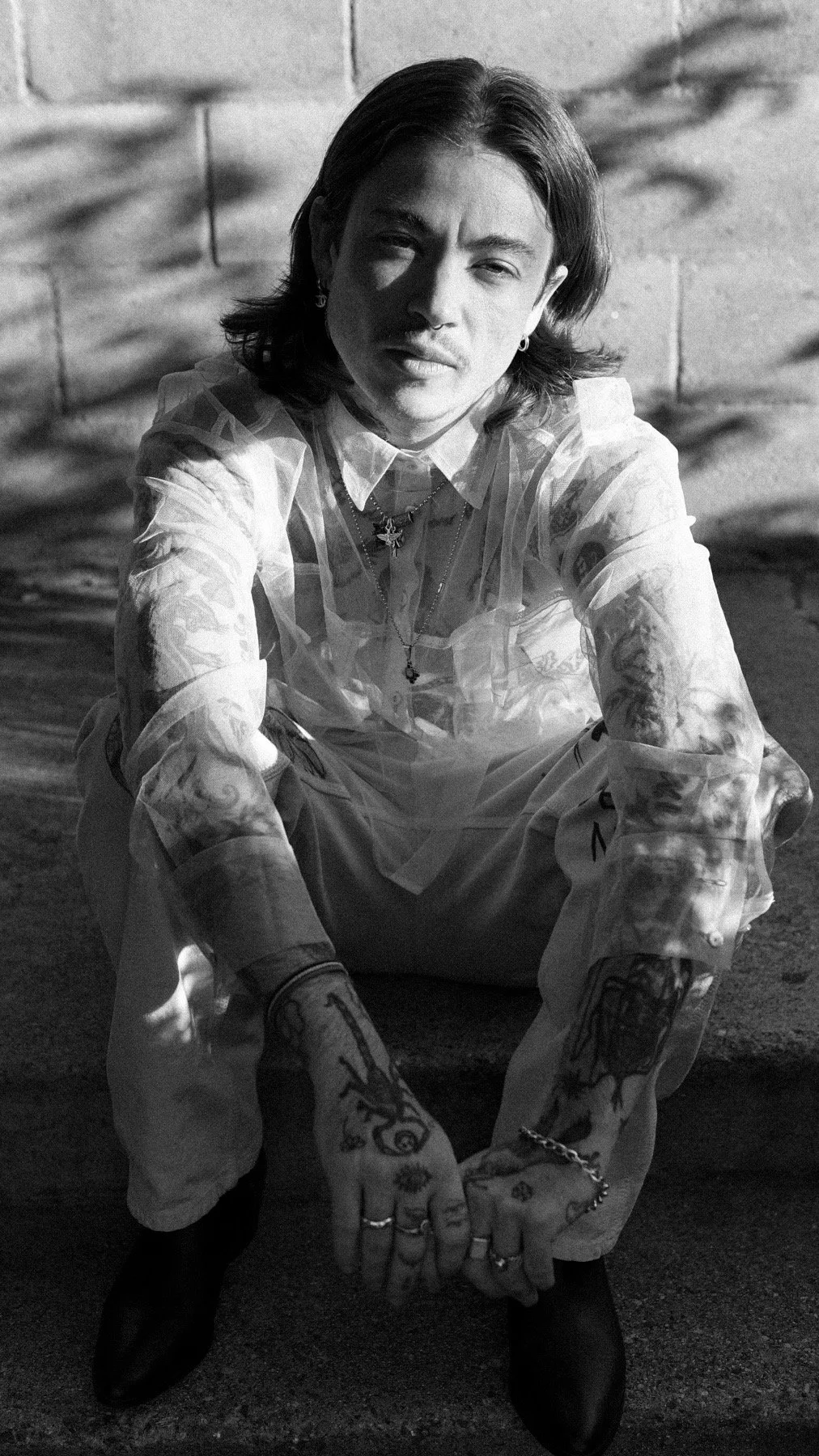
Photography by Ty May
When did you start teaching yourself music?
I first started around 2009, messing around with GarageBand. Then I stopped for a while. It wasn’t until around 2020 or 2021 that I got back into it more seriously.
At first I didn’t even know BPM or key. I wasn’t paying attention to any of that. I would find samples that I liked and that seemed to fit together and just make them work. I was also taking my poetry and trying to turn it into vocals. I’m not really a singer, so that was a struggle. Now I look for other people to collaborate with on that part.
My feelings are expressed through art. Poetry especially, music too. That’s how I process intimacy and emotion. I tend to work in phases. Now I’ve gotten into a rhythm where I rotate between different projects. I might spend a couple hours on music, then film, then writing. With the music itself, I don’t really have one reference point. One song might pull from R&B, another from classical, another from metal.
It’s whatever I’m feeling in that moment.
Can you remember encountering a piece of art that really stayed with you?
The first thing that comes to mind is actually a negative reaction, seeing the Mona Lisa in person.
I was like, this is what everybody is tripping about? It’s this little tiny thing, and I remember being confused by it. The art world has always kind of confused me, even being in it. When I was younger, I didn’t really like art history because I was always asking, what is it about this thing that everybody is responding to? As I’ve gotten older, I’ve been able to go back and appreciate things differently.
Photography became really important to me. Sally Mann’s work was something I learned about when I was in art school for photography. Her images were so moody, but they came out of ordinary things.
There was something strange about them that always stayed with me.
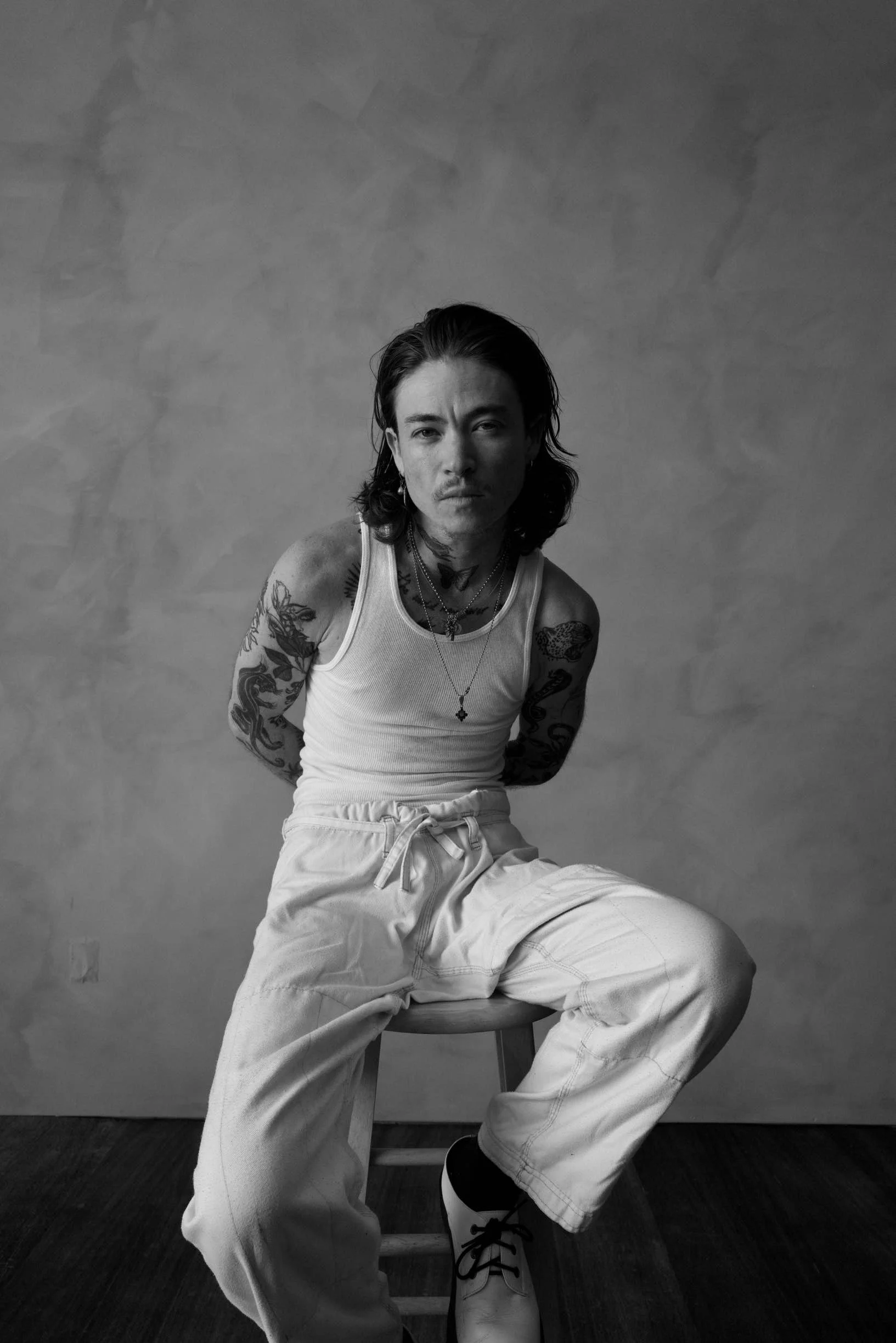
Photography by Brendan (@eyesonadeadworld)
I want to talk about your project We Fucking Exist. Can you take me back to when you first had the idea and realized you were actually going to make it?
It started with a trans friend of mine.
Her birthday was coming up, and she had posted some pictures on Instagram. I told her, if you want, we can do a shoot. I do photos. She lived out in Santa Monica, so I met up with her and we took photos and video.
When I started editing everything afterward, I thought, this feels important. This feels bigger than one person or a fun little shoot. It felt like I was capturing something that was trying to be erased.
That was the light bulb.
I created a casting call and put it on Instagram, and it blew up. More than 100 people applied. I spent about four months that summer shooting two to four times a week. I photographed around 30 people, including some couples. Trans people, nonbinary people, someone who is intersex. I did photos, video and interviews.
I got to meet all these really lovely people through the process.
What has been one of your proudest moments in building We Fucking Exist?
People’s reactions to seeing the footage of themselves.
People would be really shy during the shoot, and then they’d see it and be like, wait, this looks really cool. I feel good. It’s been an emotional roller coaster. It’s brought me to tears, hearing people’s stories.
Everybody comes from these really different backgrounds and has different stories, but there are all these similar threads. Through making the project, I started thinking that transphobia stems from a fear of authenticity.
Trans people are just living how they want to exist. I think that can be threatening to people who don’t know how to do that themselves. I’m trying to build almost like a database. Something that says these people existed and they can’t be erased just because somebody says no more meds, no more trans people.
That’s the goal.
When you imagine the future of We Fucking Exist, what do you hope it becomes?
I’d love for it to become a worldwide thing.
To be able to travel to different places, meet different people and show both the differences and the similarities.
We are literally just people like everybody else. Maybe there’s a different story, but everybody loves stories. What’s wrong with a good story?
I’m working on a coffee-table book. I want to create a short film using the interviews, and maybe something bigger from there.
I’ve had work from the project featured in a magazine in Barcelona, and a piece was featured in a Pride exhibition here.
I’d like to eventually do gallery shows. I see it becoming different volumes.
It feels like a life work kind of thing.
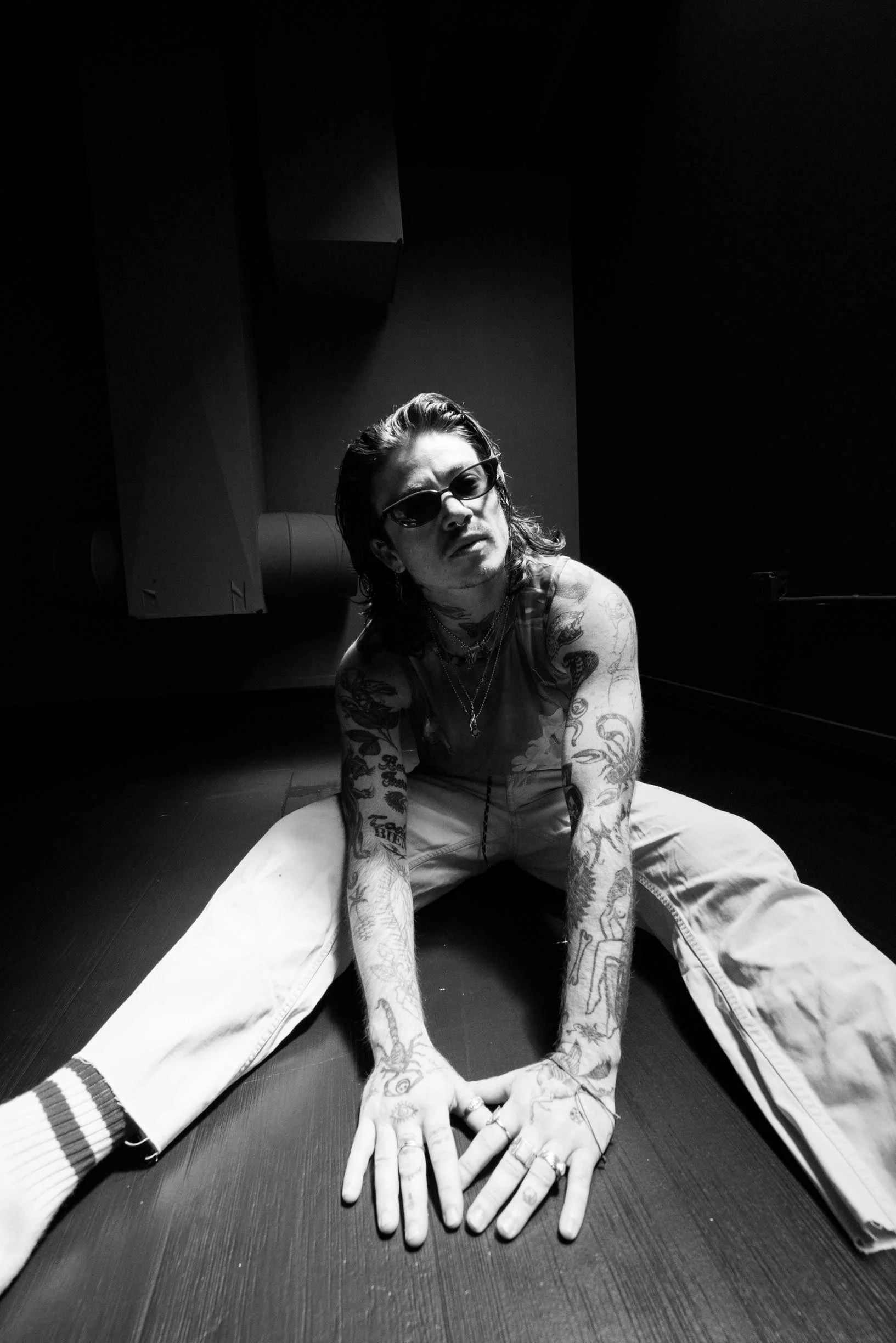
Photography by Stacie Buhler (@stacieabuhler)
WHAT’S GOOD
We always like to end on a good note. So before we go, here’s WHAT’S GOOD according to Bobby Coyote.
What’s a good book?
Cat’s Cradle by Kurt Vonnegut.
What’s a good film?
Stalker by Andrei Tarkovsky.
It’s about this zone where people aren’t allowed to go. They leave the city and travel into the countryside toward this strange place where people disappear. But it’s really the cinematography. It’s an epic classic.
What’s a good song?
“Domenico” by Satori.
What’s something good someone told you?
“Know thyself.”
I think it ties into being authentic and transitioning, or just being open to who you are in general. There’s also this idea of a core consciousness, the watcher within. What is that? Is it the universe itself watching our experience as its own? I’ve been playing with that idea recently.
Who is someone good you think I should talk to next?
Top Freak Daddy.
They’re an epic musician, a trans dude. Kind of like a queer Kid Rock, but not in the shitty way. Just in the fucking rock-and-roll way.
XX MIXTAPE VOL. 01
Every QCH guest leaves us with one track. Bobby Coyote adds this one to the mix.
STARLINGS
NTO
Henry Saiz Remix
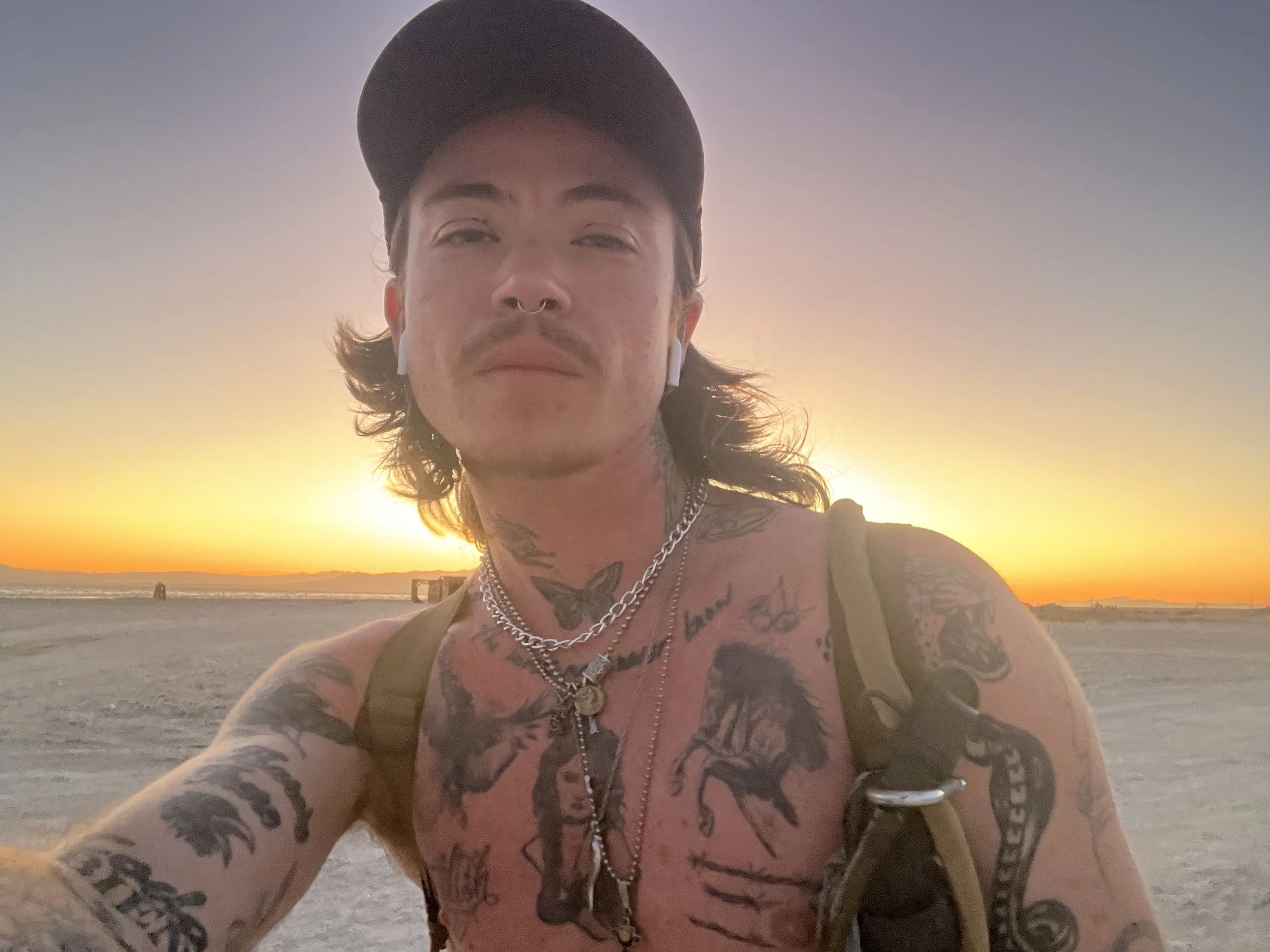
Photo courtesy of Bobby Coyote
CURRENT / UPCOMING
WE F*ING EXIST
Documentary project
CLOSE TO THE SUN
Currently in pre-production
MORE BOBBY
WWW.BOBBYTHECOYOTE.COM
POETRY BOOK
MUSIC
TATTOOS
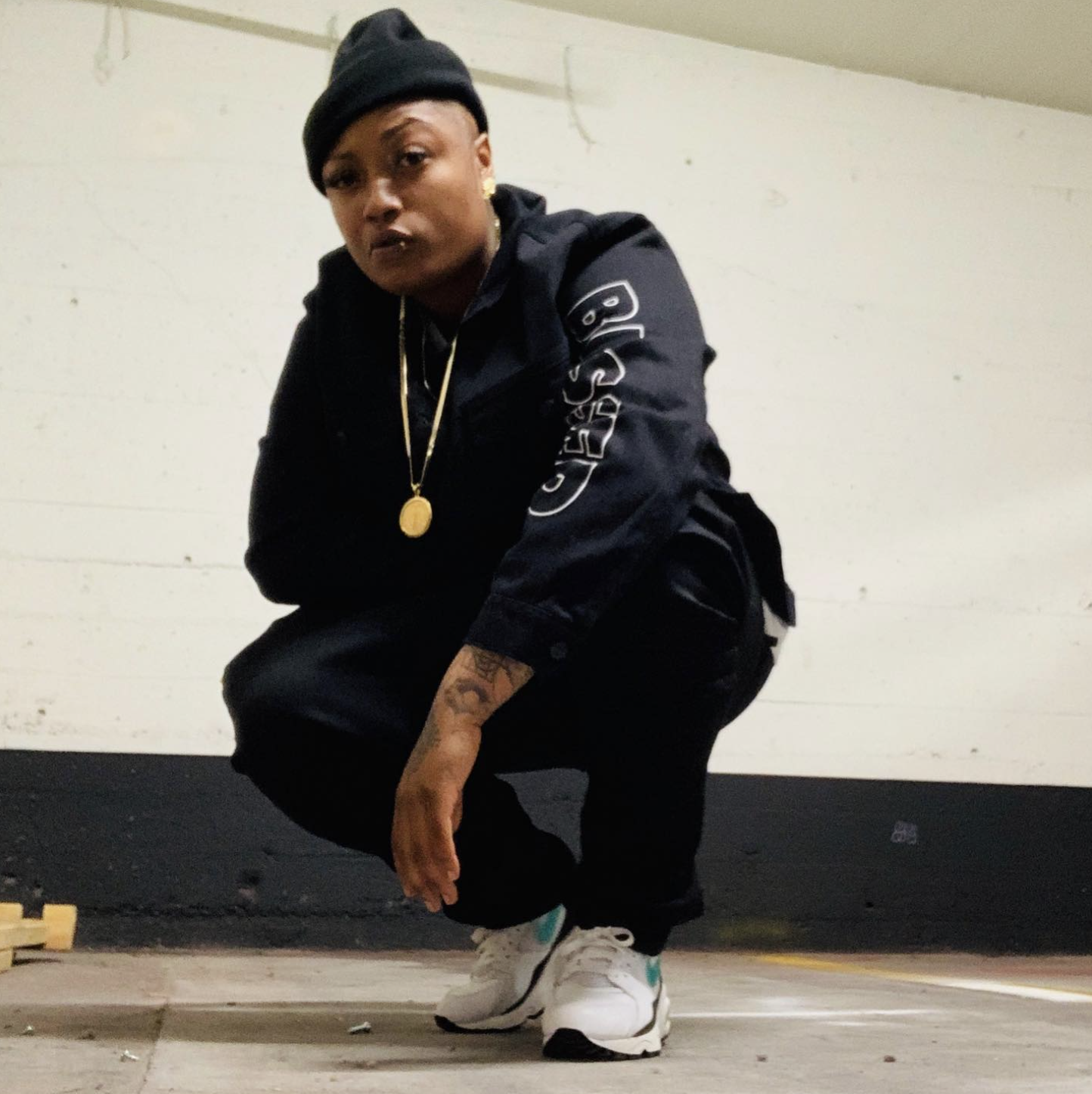
ARTEMIS
MUSIC
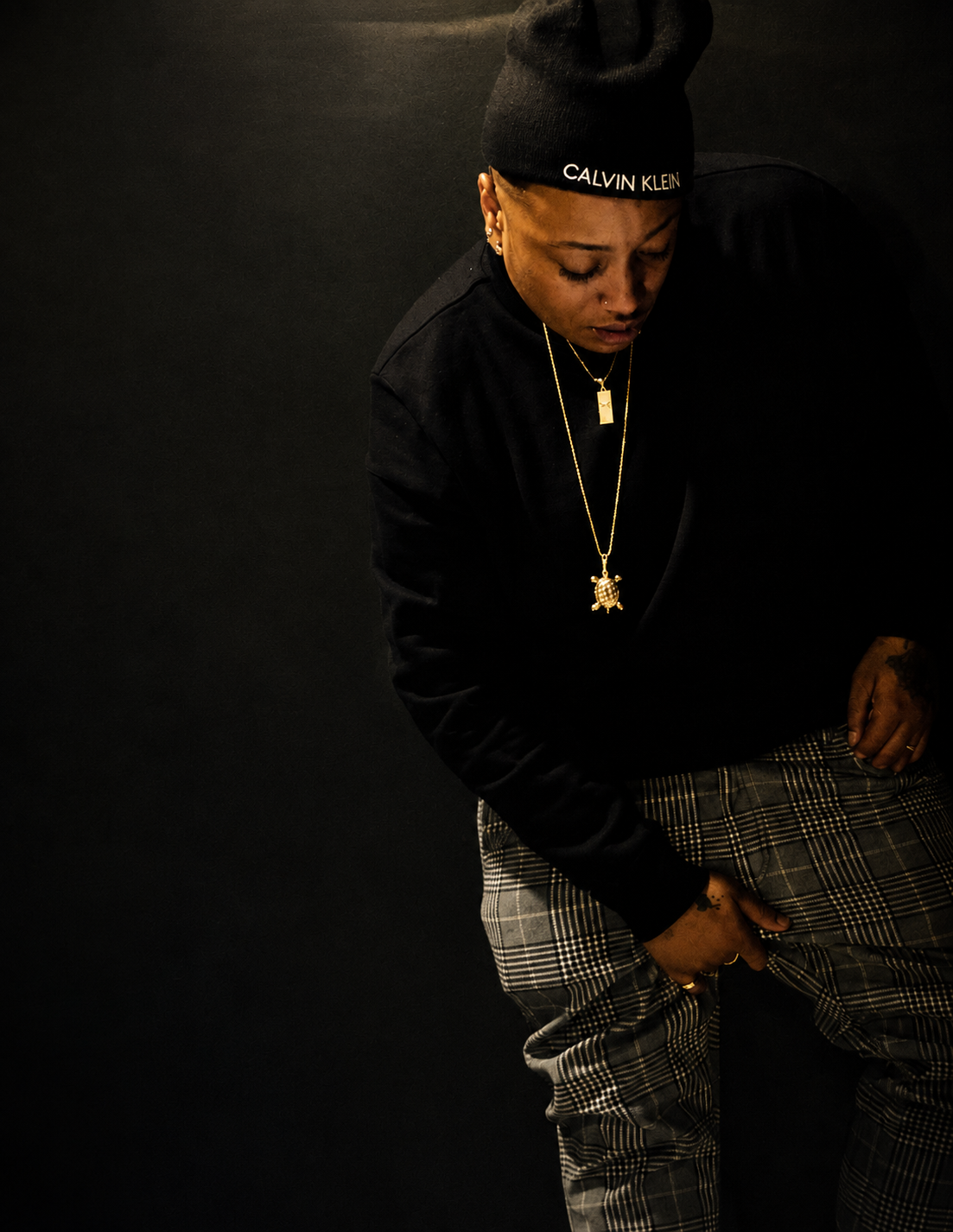
ARTEMIS IS MAKING ROOM FOR A NEW SOUND
MUSIC / INTERVIEWED BY LAUX | AUGUST 2026
IMAGERY VIA
@QUIET_STORM_LEE
Before this interview, I was thinking about you while I shuffled my Tarot deck. I pulled The Hanged Man for you. It represents surrender, patience, and seeing the world from a new perspective. Sometimes the greatest transformation doesn’t come from doing more. It comes from letting go long enough for our perspective to change.
Can you tell me about a time when letting go changed the direction of your life?
That's exactly what I'm going through right now. Letting go happened with this last church show. It pulled me so far outside of my comfort zone that I started questioning everything, including how I presented myself.
I spent some time looking through your Instagram, and I watched the gospel performances you posted. I noticed your long hair. I noticed your shoes. I found myself wondering what that experience felt like for you. Is that what you were talking about?
Yeah. That's exactly what I meant. I'm a Libra. We don't really like change. We like things to flow a certain way. I already have my own style. Then suddenly I had family members saying things like, "You look like you just came from shooting dice on the corner."
They'd compliment my performance, but criticize my appearance. My whole goal was to go in there and simply be myself. But after hearing those comments, I started getting inside my own head. I watched the videos back and started wondering if maybe I did need to change.
How did you navigate being yourself while also feeling those expectations from the church?
I was born and raised in church. Growing up, I always heard, "Come as you are." So that's exactly what I did. I came as I was. But then people immediately started trying to change me. That's when I caught myself thinking, this is exactly why so many LGBTQ people don't feel comfortable coming to church. It's happening again. I didn't want the devil to win. So I stayed.
When they asked me to send in headshots, I realized I didn't have a single photograph of myself without a hat. Not one. I was thirty-eight years old. I sat there scrolling through my phone and started crying. I remember asking myself, "What am I hiding?" That moment changed something.
Can you tell me more about that? What changed?
Spiritually, I felt like God was reaching for me. I really did. I could feel Him. But at the same time, I wasn't sure I was ready. Once I started seeing some of the judgment and negativity that came with being involved in church, I started pulling back. I don't want to play with church. If I'm going to give myself to it, I want to be completely ready.
What does giving yourself to church look like to you?
Everything. After I left the church, I disappeared from social media for almost seven months. I didn't want to smoke online anymore. I didn’t want to present myself the way I always had. It suddenly felt like everyone was watching me because I'd opened another chapter of my life.
Every time there was a performance, I had to become this other version of myself. Eventually I didn't know where I belonged anymore.
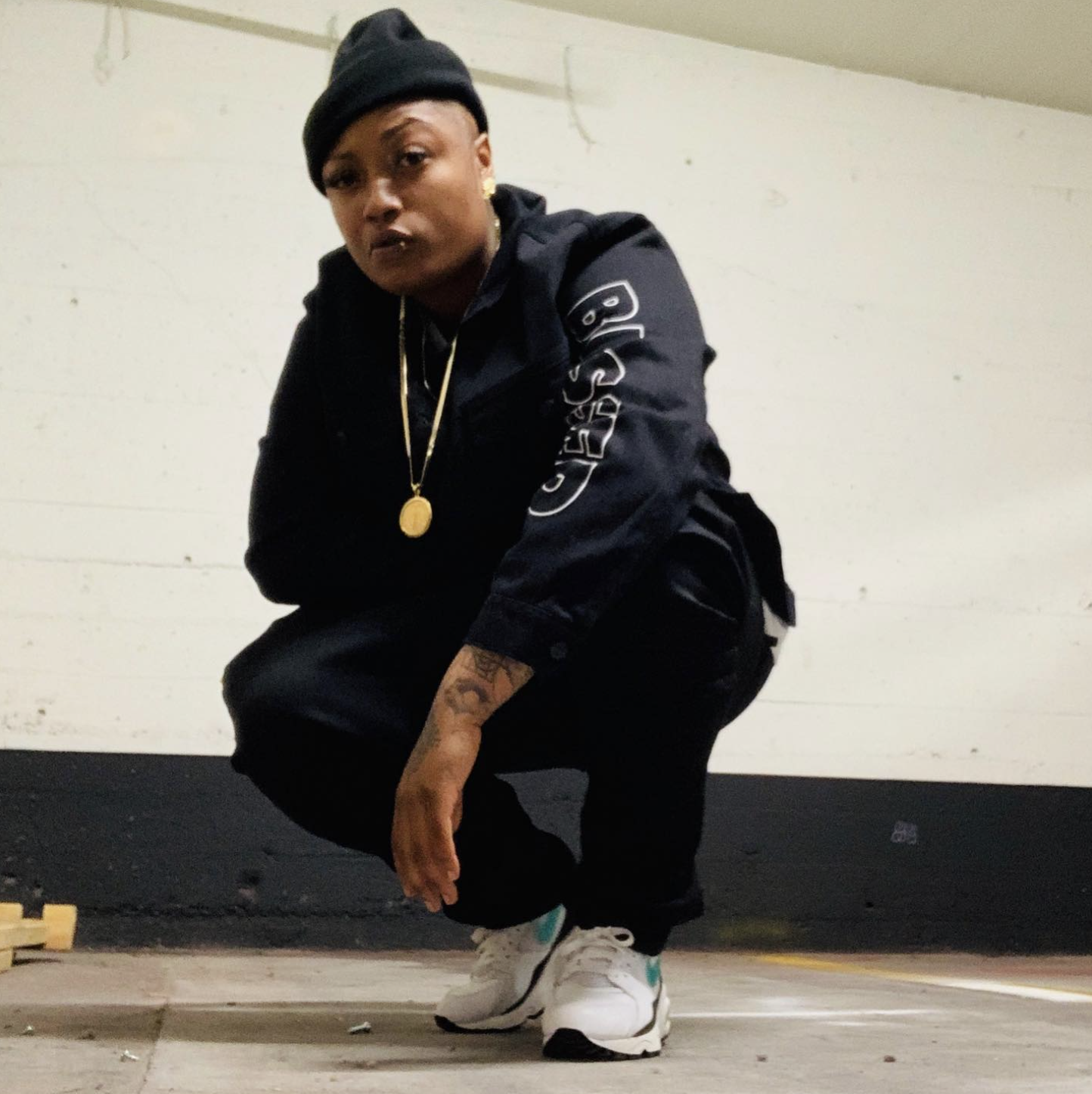
It sounds like there was a difference between what you felt spiritually... and what people expected from you.
Exactly. Watching myself transform wasn't actually the hard part. After that first performance, I remember thinking, "Wow... I haven't seen myself like this in a long time." There was actually something beautiful about it.
I wasn't against changing. I just wanted it to happen because it felt authentic... not because someone else expected it from me.
I didn't join this because I wanted people constantly telling me who I needed to become. I already knew God was doing something in me. I could feel it. The problem was everyone else trying to decide what that transformation was supposed to look like.
People don't realize everything that goes into those performances. The outfits. The hair. The preparation. The money. You’re telling somebody to sacrifice and they aren't even getting paid. Meanwhile, I still have bills. I'm still trying to survive. That was really difficult.
Was this the church you grew up in?
No. It was actually my old choir director from high school. Back then I was one of the featured singers. I'd usually get the solos. He reached out because he was putting together this big production. He told me I came to mind immediately. He said I needed to be part of it. So I said yes.
What happened once you became part of the production?
Everything started moving. We were going into the studio. I was doing radio interviews. I was getting bookings. It finally felt like something was happening. Then it just stopped.
The last really big show I did was at the Oakland Paramount. It was huge. But I only had a couple rehearsals. People were showing up late. I'd work all day, drive to rehearsal, stay there until eleven or midnight, and then have to get up and do it all over again.
Do you still enjoy singing gospel?
Absolutely. Gospel is home for me. I know I can sing gospel. That part has never been in question. Even while all of this has been happening, I still keep one hand in music. But my life has changed. The things I used to write about, the things I used to be, that's not who I am anymore.
So now I'm trying to figure out what this next chapter sounds like.
How has your writing changed?
Because Leezey isn't here anymore.
I'm still figuring out who Artemis is. I know who I used to be. I don't know if I've completely met this version of myself yet. I'm still discovering her.
Who was Leezey?
Leezey was a mess. She was fun. Sometimes I miss her. Sometimes I really don't. I've grown so much that I genuinely love who I am now.
Back then, Leezey was the ladies' man. The gigolo. I always joke that I didn't sell drugs, I sold time. I was the drug. I lived fast. I was performing in clubs. My goal every year was to make it onto the Pride stage. I did. Two or three years in a row. I made that happen myself.
When I first started performing alone, it terrified me. I was so used to having an entourage around me. Walking onto a stage by myself gave me butterflies. Eventually the butterflies disappeared. I started telling myself, "I've got this." That confidence became part of who I was.
Can you tell me about the turning point? What shifted you from Leezey into Artemis?
I think COVID was part of it. I went through a really difficult period. I lost my job after five years. Everything felt uncertain.
But I also think my relationship changed me. Before her, I cheated. I partied. I drank. I lived fast. But in nine years together, I've never cheated once. I think I was finally tired. I didn't want to keep living the same life. Drinking. Clubbing. Running the streets.
I wanted to know what a real relationship felt like. That's when Leezey slowly started disappearing.
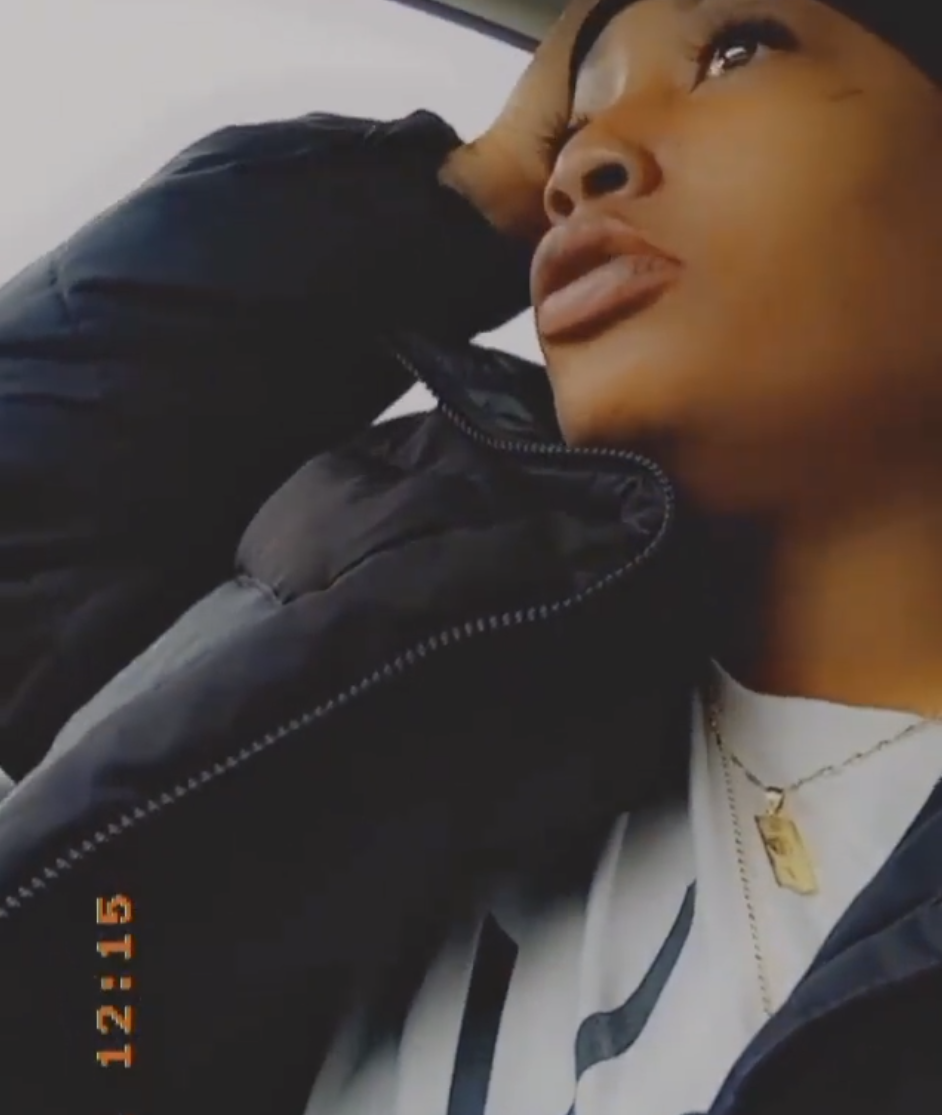
You stopped being Leezey about nine years ago?
Pretty much. There was definitely some overlap in the beginning. We got together around 2017, and I was still slowly letting go of that old life. But Christina had standards. She worked in a hospital. She had kids.
She wasn't interested in the lifestyle I'd been living. And honestly, I liked that. I liked the challenge.
So you fell in love.
Yeah. I really did.
She offered stability. Something I'd never really experienced before.
Every relationship I'd had before that, I pretty much did whatever I wanted. I'd stay out until two or three in the morning. Nobody questioned me. Now midnight rolls around and somebody's asking where I am.
That was completely different for me. But I respected it. I respected what we were building together. Sometimes I miss those carefree nights.
But I don't miss juggling multiple relationships. I don't miss the stress. The arguments. Trying to keep everybody happy.
There's so much peace in building one life with one person. That's what I've always wanted.
I'd love to know what kind of kid you were growing up.
Depressed.
My mom and I were just talking about this recently. I was always the kid sitting alone in a dark room with the blinds closed. My mom would come in and pull the curtains open. She'd say, "Come on. Let's get you out of here."
That was me as a kid. A lot of it goes back to my dad. He was murdered when I was four months old.
Four months old...
Yeah. He was only nineteen years old. They always tell me I'm his twin. I'm his only child. His only legacy.
Growing up, I watched other kids with their dads. I'd never been hugged by mine. Never been kissed by him. Never got to know him. That leaves a hole.
Did you have a relationship with his side of the family?
I did. But it never felt the way I thought it should. My grandmother even raised foster children. Sometimes it honestly felt like those kids received more love than I did.
I was always the tomboy. As I got older, the tattoos, the grills, the way I dressed, I started feeling pushed further and further away.
I'm the first granddaughter in a huge family. Everybody would be together except me. I'd constantly ask myself, why am I never invited? Why nobody call me? Eventually I started feeling isolated.
Do you think being gay had something to do with that?
I think as I got older, yeah. When I was little, everyone already knew I was a tomboy. But once I became an adult and fully embraced who I was, everything changed.
I'm not even the only gay person in the family anymore. There are other cousins now. When I found that out, I couldn't help thinking, y'all treated me this way, and now it's happening inside your own house. That hurt.
Did you ever try repairing those relationships?
Yeah. I reached out this year on my birthday. I woke up feeling like I wanted a clean slate. I wrote my aunt a long message. I admitted where I'd been wrong. I told her how I'd been feeling. I just wanted honesty. But it wasn't the response I hoped for.
A while before that, I'd even driven over to my grandmother's house. Nobody answered the door. There was love there once. I know there was. Something changed when I got older.
I watched my mom spend years fighting for me to be included. Eventually, I stopped asking. I had to grow. I had to heal. I've spent years trying. Nobody really tried for me.
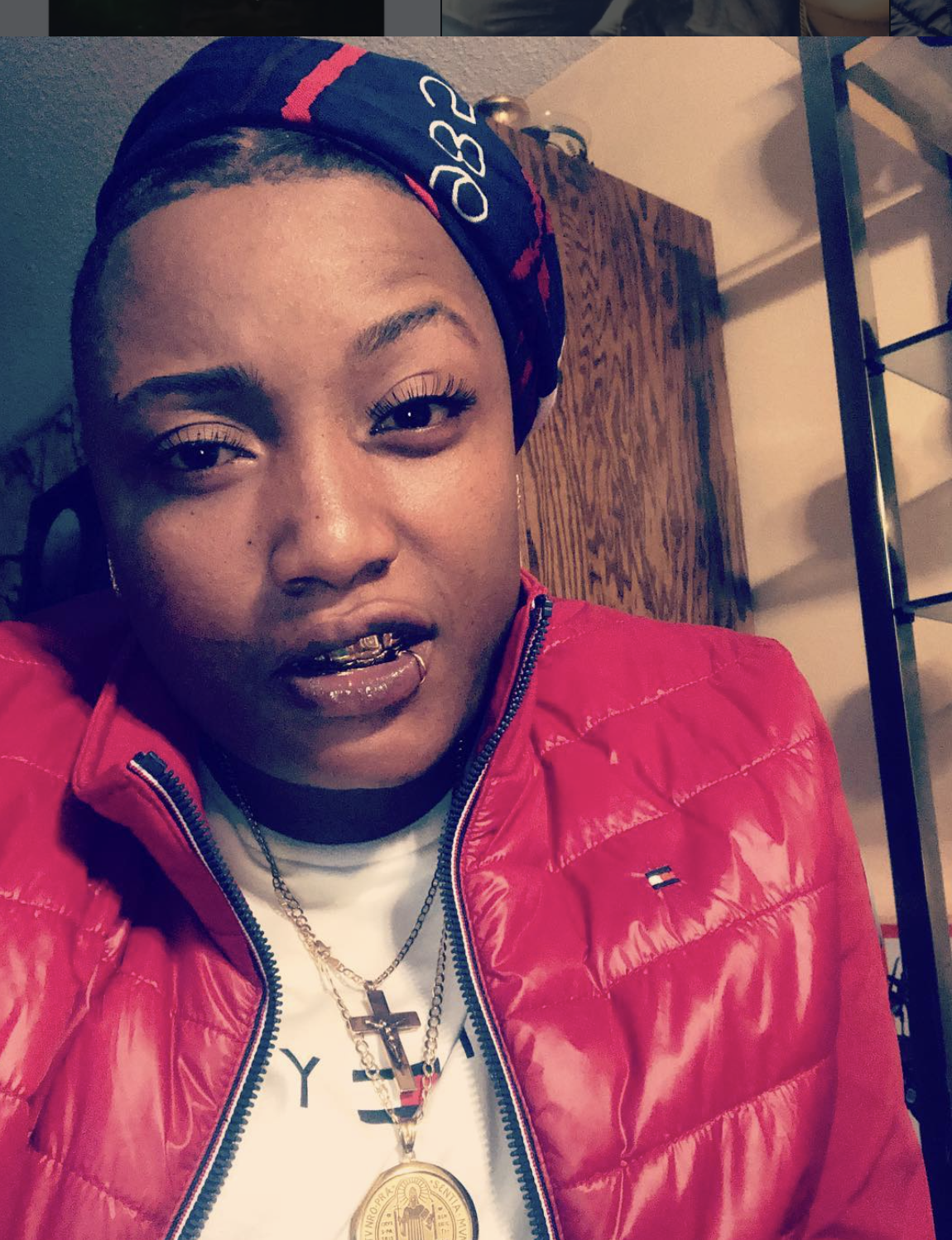
At the core of it... it sounds like you just wanted to feel loved. Wanted to feel seen.
That's all I wanted.
And the only time people really reached out was when they wanted me to sing. A wedding. A funeral. Some family event. That's when my phone would ring.
Otherwise, nothing. So I started saying no. That's one of the reasons I've become so protective of my relationship. We've built our own family. I'm good over here. I know what real love feels like now.
What about your mom's side of the family?
They're completely different. We're educated, but we're still hood. We'll fight. We'll argue. We'll drink. We'll get on each other's nerves. But if something happens, everybody shows up. Somebody needs help? Everybody pulls up.
That's the difference. On my dad's side, I stopped expecting people to show up.
Do you still have relationships with any of your cousins?
A few. But I cut a lot of people off, especially some of my boy cousins. I always felt like whenever I needed somebody, nobody came. I always had to stand on my own.
My girlfriend told me one time that she thinks I have a "man complex." At first I got defensive. But then I really sat with it. I started crying because I realized she's right.
My dad wasn't here. I never had that relationship. So when some of my boy cousins thought they were going to talk down to me or try to intimidate me, I wasn't having it. I fought back. I always fought back.
But underneath all of that, it wasn't really about fighting. It was heartbreak.
The people I wanted love from were the same people who disappointed me. Eventually I blocked a lot of them on social media. I stopped looking. Stopped waiting. Stopped hoping. Now I just live my life.
Do you think that's part of why you started making music?
Absolutely. Music gave me a place to be heard.
When did music first become part of your life?
High school. Around 2007 or 2008. I started making music with my best friend. Eventually we stopped being friends, so I kept going by myself. I've been making music ever since.
Who made you feel like an artist?
My mom. Without question. She's my biggest fan.
One day she heard me singing upstairs. She was downstairs cooking. She stopped what she was doing, ran upstairs, and asked me to sing it again. She got so excited she started calling the entire family. She made me sing over the phone for everybody.
She kept saying, "My baby can sing." That's probably the first time I realized maybe I really could.
Then when I got to middle school and high school, music became my world. I went to Oakland School for the Arts. Choir was serious. You had to keep at least a 3.0 GPA to stay in. If you stayed in, you got to travel. The Bahamas. Competitions. All kinds of opportunities.
I stayed in choir all four years. I even tried balancing basketball at the same time.
Eventually I gave basketball up.
Music won.
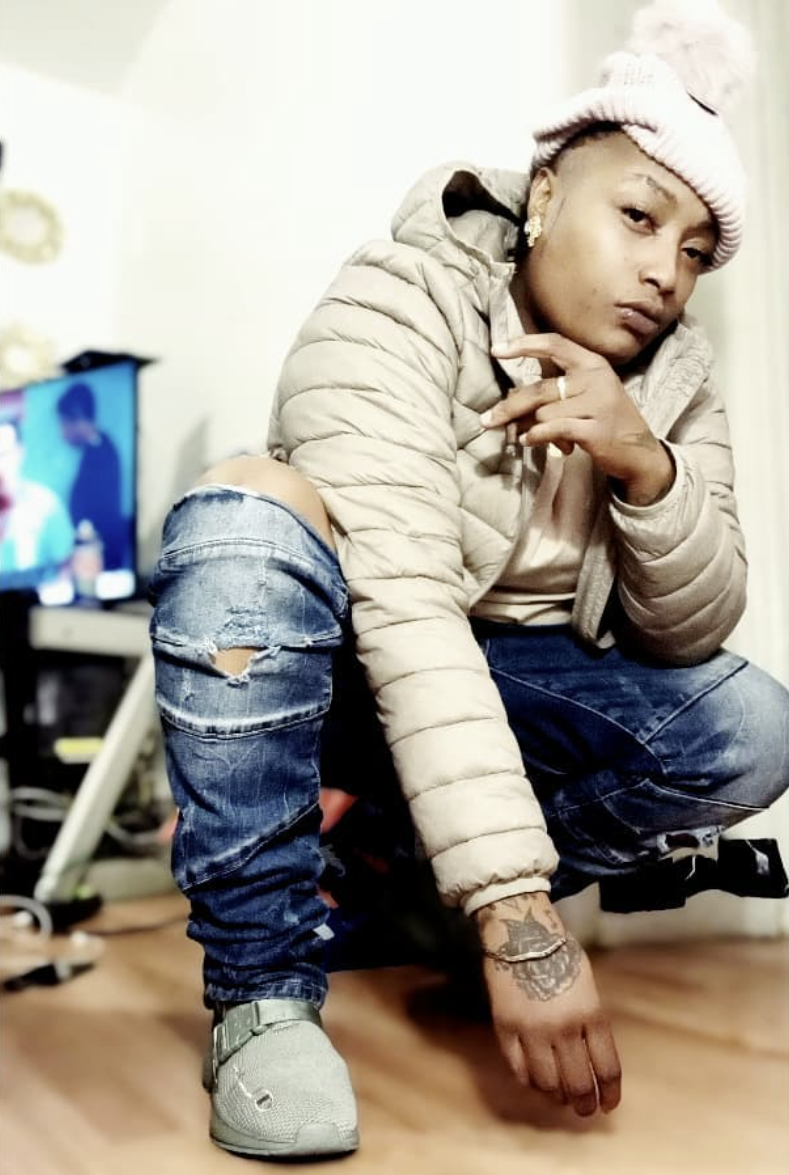
Do you make your own beats?
No. I usually find them online. Every once in a while a producer will send me something, but it has to slap. If it doesn't move me, I can't write to it.
What's your writing process?
The beat comes first. Always. I'll listen to it over and over. I'll think about how other people are going to hear it.
Then I start humming. I'll play with melodies until something starts coming out naturally. Once I find that, I'll write the first couple of lines. After that, the song usually tells me where it wants to go.
One thing I noticed listening to your music is that you sing your own hooks.
Yeah. That's me. I remember a pretty well-known rapper in the Bay asking why I was singing my own hooks instead of having somebody else do them.
Before I could answer, my producer said, "Because that's how she wants to do it. Not everybody can sing and rap." That really stuck with me.
I think that's one of your biggest strengths. You're two artists in one person.
The funny thing is, I still think I need a ghostwriter sometimes.
Really? Why?
Not for rapping. For singing. I can write hooks. I can hear melodies. But writing a full R&B song is hard for me.
That's one of the reasons I was so excited about finishing the gospel album. It would've been the first time I really got to hear myself carry an entire singing record. I wanted to know what that version of me sounded like.
Can you think of a project that changed the way you see the world?
Martin Luther King Day this year. Burke's School invited me to sing. That experience changed me.
Watching those kids, the teachers, everyone listening together, some were crying. Most of the students were white. I remember looking around the room thinking, we're one.
Music did that. For those few minutes, nothing else mattered.
Who invited you to sing at Burke's?
Margot. She works at the school. She'd actually come to church and watched me perform several times before inviting me.
The school even paid me to come sing. But honestly, the money wasn't even the best part. The best part was realizing those families had experienced something they probably never would have experienced otherwise.
They came into a Black church. They felt that energy. They felt that spirit. I got to share a part of myself and a part of my culture with people who may never have stepped into that space on their own. That meant everything to me.
Listening to your music, I kept hearing this thread about becoming someone new. What changed?
For the first time, I'm actually living as myself.
Growing up, I felt like I had to become what everybody else expected.
The people in the streets knew me as Peter Lee's daughter. I felt like I had to be tough. I had to be respected. Looking back, I don't think I was really living for myself. I was living for everybody else.
That's why I told you earlier, I think I'm still a little stuck. Because now I'm trying to figure out: Who am I? What do I actually like? Not what everybody else expects from me. What do I want?
Do you still feel called toward church? Maybe not that particular church, but church in general?
I do. I really do. But I also realized there was a lot of pressure that came with it.
That's part of why I feel so stuck right now. I've been focused more on trying to survive. Trying to become successful. I'm tired of struggling.
Maybe right now this just isn't my season.
When you say stuck, what do you mean?
Disappointed. That's really the word. Disappointed.
Disappointed in who?
Mr. Cole. Somebody I've looked up to since I was thirteen years old. I never thought he'd leave me hanging like that.
What happened?
He pulled me into this whole experience because he said I needed to share my light with the world. And I believed him.
I stepped completely outside my comfort zone. He told me, "I see you becoming something you probably don't even see yet." I trusted him.
Then after the Paramount show, everything changed. I performed in front of thousands of people. I felt completely unprepared.
Afterwards it was almost like, "Okay, thanks." No direction. No next step. No real guidance.
It started making me wonder: Was I here because people genuinely believed in me, or because I was helping sell tickets?
It sounds like you felt hurt by someone you really trusted.
Exactly. He was like an uncle to me. Almost like the father figure I never had. That's why this hurt so much.
Right now, music feels like it's giving me the same thing life has been giving me: a lot of disappointment.
What kind of help do you feel like you need?
Somebody to help put me in the right rooms. I've managed myself my whole career. There's only so much one person can do.
For the first time, I finally felt like I had somebody managing me. Things were moving. Then when it came time to actually make the album, everything slowed down.
After all those drives and all those hours, we still hadn't recorded a single song. I couldn't keep doing that.
I've already got songs. I don't even want to keep waiting on new music. I want to shoot videos for what I already have.
People haven't even heard those songs yet. Why keep chasing something new when I already have music I'm proud of sitting on my computer?
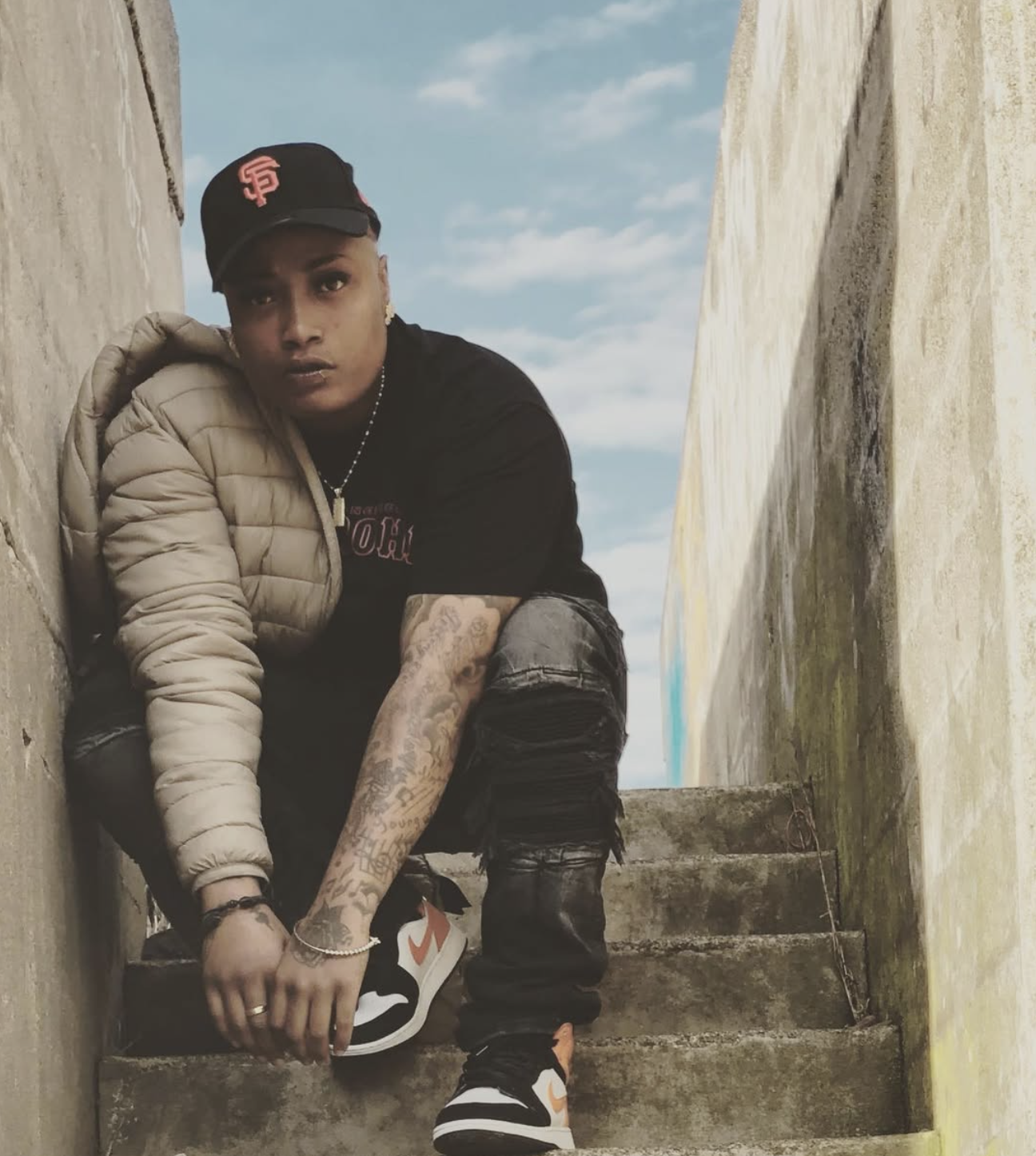
You don't really have to wait on anybody anymore.
You're right. That's the beauty of social media now.
I think I've just been in my head trying to figure out what's next. And when your money isn't right, that's all you think about. Everything else gets pushed aside.
I'm basically starting over right now. I've cleaned up the house a lot recently. I finally have space. I want to dedicate one corner of the house to creating. My own little live-stream space.
I've already got the vision. Now I just need to build it.
Instagram: @quiet_storm_lee
TikTok: @citylee88